EducationGlobal Politics
UGANDA: UNLOCKING THE TRANSFORMATIVE POTENTIAL OF UNIVERSITIES IS A KEY ISSUE FOR ACHIEVING RURAL DEVELOPMENT-GULU UNIVERSITY DON

Strengthening Gulu University’s contribution to community Development in Northern Uganda. Doctrinal research and a policy report presentation by Asaf Adibua, the Chief, Planning and Development at Gulu University.
GULU CITY-MONDAY, OCTOBER 26, 2026
By Okumu Livingstone Langol, (Uganda Correspondent)
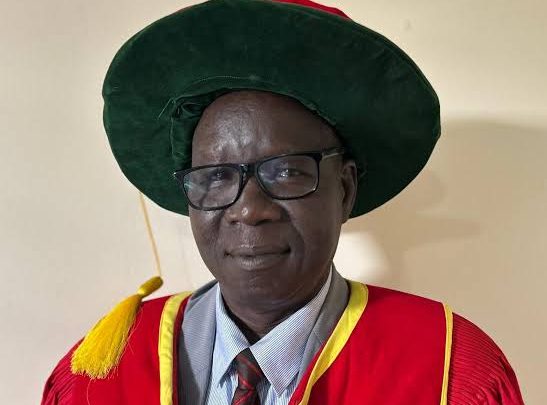
There is an adage that says, “Unless a tall tree is down, you will not know how giant that tree is. Dr. Asaf Adibua, for a long time, was not known in the outside world for how powerful, skilful, and knowledgeable he has been until his ability as chief policymaker for Gulu University was unveiled in Ethiopia.
Dr Asaf Adibua made a key presentation, among others, on how Universities can serve as powerful catalysts for socio-economic transformation through teaching, research, innovation, and community transformation.
Dr. Asaf Adibua, on Saturday, October 24, told Our Correspondent in the interview one-on-one he was put to task what is yours takes as Chief Planning for Gulu University on community transformation.
Dr. Asaf Adibua argued that Gulu University has significantly contributed to improved livelihoods, employment, enterprise development, education, health access, infrastructure, and social cohesion in surrounding communities.
Through scholarship, community enterprises, and university teaching, faith-based engagement is among the strongest predictors of positive community transformation. While other persistent challenges included skills training for income generation, inadequate primary healthcare education, poor housing, and weak sanitation infrastructure, these require targeted policy attention.
I mean strengthening university-community partnership should be a national development priority and an integral component of Uganda’s higher education policy.
Noting the policy challenge has been High Education institutions are increasingly expected to contribute directly to national development beyond their traditional mandates of teaching, research and community service. However, many communities in Uganda continue to face persistent poverty, youth unemployment, inadequate housing, poor sanitation, low educational attainment, and limited access to clean drinking water and quality healthcare.
Gulu University Chief, Planning and Development argues that, although Universities possess considerable knowledge, expertise and innovation capacity, policies that systematically integrate higher education institutions into local development remain limited. Consequently, the full potential of universities as agents of community transformation has not been fully realised.
Asserting that there is therefore a need for evidence-informed policies that strengthen the
developmental role of universities while ensuring that surrounding communities benefit directly from university investments.
For example, evidence from the study revealed that this policy brief is based on research involving 390 households in communities surrounding Gulu University. The study employed a cross-sectional design using household questionnaires, key informant interviews, and geospatial techniques. Data were analysed using descriptive statistics, Principal Component Analysis (PCA), and multivariate logistic regression.
What Has Gulu University Achieved? 5 Dimensions:
Dr Asaf Adibua, in an annotated name as follows: Economic transformation allows the University to contribute to increased employment opportunities, growth of local enterprises, improved household savings, increased participation in business and civil service employment, and enhanced livelihood opportunities for young people.
Secondly, Social Transformation communities reported improvements in access to quality education, access to healthcare services, community participation, reduced crime, and increased educational opportunities through scholarships.
Thirdly, in the Physical Transformation, the study found improvements in access to clean water, electricity connections, waste management practices, and general community infrastructure. However, housing quality and sanitation remain areas requiring further investment.
Fourthly, through the Political Transformation, through the influence of Gulu University, Communities demonstrated increased participation in political activities and local associations, freedom of expression, independent decision-making, and civic engagement.
What Has Gulu University Achieved? In addition to these achievements, Gulu University has achieved spiritual and social cohesion. The University has also contributed to peaceful coexistence, stronger community relationships, increased participation in faith-based activities, and greater social harmony.
What drives community transformation? Gulu University Don observed that the study has identified several factors with statistically significant influence on community transformation; among others are as follows.
The internal University factors which gave birth to the strongest institutional drives included scholarships for community members, university-supported enterprise development, teaching and knowledge generation and dissemination, and religious and community engagement activities.
Secondly, external community factors, like households that engaged in commercial farming, civil service, and businesses, experienced substantially higher levels of transformation than households.
relying primarily on subsistence farming. Household members with higher education levels experienced more transformation.
These findings suggest that universities generate greater impact when academic programmes are linked to local economic development opportunities.
Gulu University Chief, Planning revealed that about 390 households were surveyed so far and the dimensions of transformation through economic, Social, Political, physical and spiritual structures.
Among the strongest predictors of transformation were teaching done at the university, scholarships offered to the community, individuals’ level of education attended and participation in commercial farming.
Dr. Asaf Adibua outline that there has been qualitative finding which were in concurrence, however, the remaining gaps, despite the notable progress, several challenges continue to constrain community transportation. These include limited vocational skills for income generation, low levels of higher education attainment, inadequate primary healthcare education, poor housing conditions, weak sewage and sanitation systems, and limited programmes addressing social and moral development.
Observation by our Correspondent: Acholi Sub Region has been hits badly, because of the education system that was built by Religions founding bodies, the Roman Catholic Church of Uganda, and the Anglican Church of Uganda, including Islam that put strong foundation of school inspectorate.
Today in Omoro District, the District Education Officer Rev. Ocheing Ochen noted that there 76 primary education schools across the Omoro District, but they have 10 uncodified schools, because the funding board of directors used to be the Archbishop of the Catholic Church and the Anglican Church of Uganda and Islam, who were very active in the Board of Directors.
“In the 1950s, such an uncodified school was founded, and the teachers were paid by the government to support such an initiative, but we are trying very hard to accommodate those grave mistakes”, Rev. Ocheng Ochen, the Omoro District Education Officer, concurred.
Following the pronouncement by the Ministry of Education and Sport that banned the Parents Teacher’s Administrative PTA-sponsored non-teaching staff, the Omoro District Council held a meeting in Odek Sub County on 14, October 2026. The Council Resolution passed that all PTA teachers be enrolled in all schools, because of the overwhelming numbers of pupil’s ratio to teacher’s ratio.
Gulu University Chief Planning agreed that there are these gaps, which indicate the need for stronger investment in university extension and community outreach programmes. The policy recommendations directed to the Government of Uganda, Gulu University, Local government and Development Partners and the Government of Uganda through the Ministry of Education and Sports, together with the National Council for Higher Education and relevant ministries, should integrate university-community engagement into national higher education policy.
Among other challenges are increase public funding for university extension and community outreach programmes, establish competitive for community-based research and innovation. Promote stronger collaboration between Universities and Local Governments, and recognise community engagement as a core performance indicator for public universities.
Here, Gulu University has done very well by introducing Indigenous Knowledge, where Dr Veronica Alice Lamwaka is heading the programmes for distance learning, where over 400 older and younger people have been pursuing Indigenous Knowledge.
Establish competitive grants for community-based research and innovation, promoting stronger collaboration between universities and local government.