National
UGANDA: SENSIBILITIES AND TACTICS UNDERSTANDING GULU CITY-GULU UNIVERSITY DON
Understanding Gulu City

“As streetlights line up and bright in places that are installed, in many parts, the city is dark and worrisome. Many city dwellers dodge these dark parts as they are also considered, ‘dark spots’ for pickpockets.
But these ‘dark spots’ are also placeholders for street children to return to after circulating around. Whereas they bond amongst themselves and familiar with all the corners including politics and gossips of the city, those relatively better in the city trajectory, consider the street children as a problem whose wild manners ‘stinks and spreads’, even when many are not, but simply socially excluded (an issue we shall return to, in another paper).”
GULU CITY-THURSDAY JULY 23,2026
By Okumu Livingstone (Ugandan correspondent)
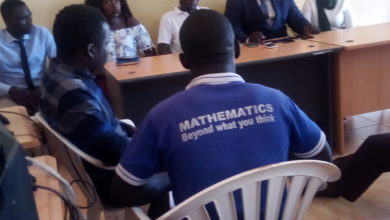
Prof. Daniel Komakech carried out analytical finding in the post war conflict Northern Uganda, here below is his verbatim, third edition
“In a combined experience of war time and the dense circulations in the cityscape, sensibility is required in order to survive.
These sensibilities are not to be deployed at its very basic but rather, at its best. Like the experience of abduction, living in the bush and plotting escape that the returnees endured, these and many young people also learned to employ all the senses in an intense way.
The rebellion of the Lord’s Resistance Army (LRA) and its incursion in northern Uganda and Acholi, in particular, made many young people to learn to decode, to see through, to sieve, to read, to recognise tones and modes, and all that they probably meant.
To many young people that escaped from the LRA captivity, knew the very basic idea of escape being carefully planned with all the details, waiting for a crack in the command structure or laxity thereof, to strike a move towards escape. Similarly, those in the IDPs also lived in a constant uncertainty of whether the LRA rebels would strike or not. As a result, keeping alert, listening intensely to conversations and reading signs or government troop movements, as important scripts.
This sensibility became a certain mode of intercepting and interrogating one’s surroundings and experiences to gain or pin down some amount of insights of what really was the case or what else it offered as it unfolded or disclosed itself.
Sensibility as in the case of wartime, was not only about taking an insight or good reading of situations in order to take precautions, but was also positively mobilised as life enhancing capacity to stay afloat. While sustained and carried along in the cityscape, it carried a special position in the dense relation and circulations.
As a skill gained in the war-time, in this space of continued uncertainties, young people gathered as strangers to each other and so, everybody was weary about everybody else, just like it was in the case of war-time. As a result, there was a constant reading – ‘reading-as’, and constant ‘over-seeing’, trying to figure out what is more than what is less, in peoples’ every day.
Yet on another scale, the crowding of bodies or subjects in the city, added to the complexities of the continued displacements. As bodies disperse and mingle far and wide in the arteries and hinterland of the cityscape, the pressure of staying afloat was doubled or tripled.
This therefore required an intensified sensibility into things and relations with other bodies. While speed was mounted to move ahead of everyone, brakes of ‘stop’ and ‘go’, were most preferred.
Speed as was observed, crashes one since it was oblivious to insights and details. While it became apparent that, brakes enabled careful maneuver. Here, intuition was useful as much as the senses, to read beforehand, to discern before being confronted, and to lay strategies before somebody else did the same.
At the same time, there were fall back positions or schemes laid as well, should the others have got ahead of you. Distanciation, being timid to speak or utter, staying low, being illegible or opaque, as well as having many tongues, were not moral issues but rather strategies often deployed to try and outwit others who were probably up to the same strategies.
Once all or majority are self-styled in an illegible moment, rates of illegibility make the city more and more opaque, which yet again, needs more and more reading and insights, calling in, a further intensification of sensibility. From the stand point of self-representation, positions were taken to enhance agency and tactics to navigate and outwit.
“It was a progressive shift from moods of interrogating myriads of happenings, into swinging into actions to instrumentalise the materiality of the cityscape for social becoming. In shifting the contours of sensibility to that of agentic maneuver, tactics for this dense cityscape was not only required but also intertwined with sentiments of fear of being crowded out or being ‘displaced back home” (Vigh 2015:233) or engulfed in a “bad surrounding” (Sverker 2008) once again. However, all these take place in Gulu-city, imposing Gulu as central to this study. In the section that follows, we follow a little bit why Gulu city was central, looking at its positioning during the war, in the post and persistent experience (s).”
The city of Gulu has been ‘globalised’ to a certain degree in terms of its urban architecture, leisure services, markets, arts and food culture. Diaspora, international aid workers and volunteers’ movements and urban engagements, have shaped
hinterland of the cityscape, the pressure of staying afloat was doubled or tripled.
This therefore required an intensified sensibility into things and relations with other bodies. While speed was mounted to move ahead of everyone, brakes of ‘stop’ and ‘go’, were most preferred. Speed as was observed, crashes one since it was oblivious to insights and details. While it became apparent that, brakes enabled careful maneuver.
Here, intuition was useful as much as the senses, to read beforehand, to discern before being confronted, and to lay strategies before somebody else did the same. At the same time, there were fall back positions or schemes laid as well, should the others have got ahead of you. Distanciation, being timid to speak or utter, staying low, being illegible or opaque, as well as having many tongues, were not moral issues but rather strategies often deployed to try and outwit others who were probably up to the same strategies.
Once all or majority are self-styled in an illegible moment, rates of illegibility make the city more and more opaque, which yet again, needs more and more reading and insights, calling in, a further intensification of sensibility. From the stand point of self-representation, positions were taken to enhance agency and tactics to navigate and outwit. It was a progressive shift from moods of interrogating myriads of happenings, into swinging into actions to instrumentalise the materiality of the cityscape for social becoming.
In shifting the contours of sensibility to that of agentic maneuver, tactics for this dense cityscape was not only required but also intertwined with sentiments of fear of being crowded out or being ‘displaced back home” (Vigh 2015:233) or engulfed in a “bad surrounding” (Sverker 2008) once again. However, all these take place in Gulu-city, imposing Gulu as central to this study. In the section that follows, we follow a little bit because Gulu city was central, looking at its positioning during the war, in the post and persistent experience (s).
Understanding Gulu City
The city of Gulu has been ‘globalised’ to a certain degree in terms of its urban architecture, leisure services, markets, arts and food culture. Diaspora, international aid workers and volunteers’ movements and urban engagements, have shaped the global character of Gulu urban space.
There are numerous coffee shops, pizza, hamburger and other fast foods that have sprung up to serve a discerning local and international clientele. While, at social levels, more and more international music – classical opera and solos, are played as well. Local craft and tailoring are booming together with ‘summer’ or ‘vacation’ homes, ‘apartments’ or ‘studio’ rooms.
These dynamics went along with processes of gentrification (Büscher & Vlassenroot, 2010). But also, the city main centers also sit in an inviolable double, with the sprouting luxury development and coffee points living side by side with broken or collapsed and demolished houses that are yet fallow and to be gentrified. The roads until recently when the government tarmacked the main centers, were largely murram with frequent organised demonstrations over impassable murram roads by the locals, as Odokonyero puts it (2013). But also, those roads with tarmac or recently tarmacked, lack planned road-parking and good drainage. Drainage is particularly a challenge. When it rains, it pours, it floods (using the words picked from Orji (2018) and the sewer pipes burst open, flowing into the streets (Odokonyero, ibid.).
5
Gulu city realities demonstrate strong inequalities, precarity, and poverty. With the war coming to an end in 2006, Gulu is a post-conflict city. Yet, as Beall and Goodfellow (2011) have argued, the end of civil war did not make an end to civic conflict and the post-conflict social crisis amongst urban youth as Branch (2013) confirms this.
The continuation of conflict dynamics in the post-conflict period is described for example by Vigh in Crisis and Chronicity: Anthropological Perspectives on Continuous Conflict and Decline, explaining how the Guinea- Bissau youths experienced the existential ambiguity in which ‘things only go from bad to worse’ (2008:6). Henrik observes how conflict is not a passing period of chaos, but rather settles as a social state, shifting from a state of emergency to a situation of emergency, a settled life of uncertainty.
This reconstructive vision of conflict prompts Denov and Buccitelli (2013) observation of conflict and crisis being chronic and endemic in post-war period. Conflict and crisis in that sense is both visible and receded to the invisible background, acquiring what Vigh calls “an enduring hold on people and societies as it becomes endemic rather than episodic (ibid.:15). In all these, one sees that the difference between war and peace is blurred, with conflict acquiring what Tausig (1992) calls, “an air of social and existential consistency”.
Gulu city as a de-facto city of the displaced, offers us this purview and from which tendencies of navigating enduring and chronic conflict is elaborated. In this shifting from ‘state of emergency’ to ‘situation of emergency’ in a constant improvising in a terrain of chronic state, Gulu city shows and elaborates the uncertainties of post war realities. For example, the dynamics of return and reintegration of formerly abducted people or ex-LRA soldiers and wives have added to the complex challenges of post-conflict cohesion, as has been described in detail by a number of researchers (Porter 2017, Baines 2009, 2017, Dolan 2009).
Several ex-combatants have chosen to reintegrate in the urban tissue of Gulu city instead of returning to their rural homes. In the middle of all these, people are weary of each other and therefore, there are minimal interactions.
Worse still, those considered or known as former LRA combatants, are gazed at with a look of contempt while the former combatants try at that moment to tactically elude the contemptuous gaze by looking elsewhere or hurriedly walk pass. While women who were abused as sex slaves by LRA are for most part shunned by the male town dwellers as ‘overused’ and with ‘little’ value left.
But there is still a segment of the former LRA combatants who are considered very useful; they are called the ‘bouncers’ (for their skills of dispersing riots or stampede and their physical build-up) in the mushrooming discotheques and social places in Gulu city, to quell any possible violations in the dance arena. While at the same time, the security companies have hired many former LRA combatants to work as night guards in certain establishments or installations.
Overtime, social exclusions, social despair, and poverty in the post-war city of Gulu, contribute to a general state of ‘alert’. For example, this state of alert is reflected in the urban everyday infrastructure of reinforcing doors and windows with burglar proofs while new constructions take these precautions as a given.
As street lights line up and bright in places that are installed, in many parts, the city is dark and worrisome. Many city dwellers dodge these dark parts as they are also considered, ‘dark spots’ for pickpockets. But these ‘dark spots’ are also placeholders for street children to return to after circulating around. Whereas they bond amongst themselves and familiar with all the corners including politics and gossips of the city, those relatively better in the city trajectory, consider the street children as a problem whose wild manners ‘stinks and spreads’, even when many are not, but simply socially excluded (an issue we shall return to, in another paper).
Most times, the street children ignore and push on with life, ‘cooking their head (finding cracks in the city to take advantage of or utilise). While the unemployed or unemployable youths flock the bright lit parts of the city at night or at day break, to come and ‘watch’ or ‘play’ a football match – betting. When a match ‘scores’ (to mean, his betting won), the Indian who owns the betting house is rushed to for the prompt payment and immediately the young man gets lost in the thin air but probably after a bottle of beer to ‘rest’ from the tedious ‘playing’. For those who lost the ‘match’, they return to a gathering of their peers as they curse life and the ‘bad’ politics.
This normally happens in a boda boda stage which at that moment is no longer a boda boda stage but a ‘parliament’, a mobile parliament with the members choosing the topics for debate according to the daily life events.
Households also engage in combined urban livelihoods, particularly, in the informal sector. In this tenacity of life, the informal sector of household maneuver to make life livable, has invaded the arteries of Gulu city. Most of the streets have crowded-out earlier city planning of the streets, open spaces such as the verandahs, and as such, now populated with households selling roast maize, sweet bananas, oranges and so forth.
While hawkers with their items to sell, ply the streets often traversing spaces considered private or enclosed, have perfected their routes. There is also another segment whose maneuvering capacities have halted or are no more life-enhancing and have resorted to begging.
This segment is largely composed of the young girls between 7-10 and the elderly who are at the evening of their lives. They deploy themselves in soft spots to the emotion, such as the church and coffee shops or restaurants. Quite skillful, they wait and see when a man is with a lady and they come and beg.
In this case, the presence of the lady-folk with the gentleman becomes life enhancing since the man culturally has to show worth and capacity, forcing him to give. On the other, the middle class of Gulu also are in a struggling circuit. Although they stay either within the city or its outskirts which is popularly considered better, they have also crafted a meta-nodal informality.
Some mostly females, have turned to hawking of an improved sort. They carry their items; perfumes, lotions, fruits and so forth to sell in their offices or, through phone calls. While some men in the upscale, bet from their offices with laptops, trying their luck. Others read newspapers to see new adverts for consultancies or fieldwork. All these are to do with crafting the everyday survival in the current precarity of the dense city with many livelihood challenges.
In the section that follows, we case study the trajectory of Gulu city, by focusing on a more specific group, a group of young people – young men, whose household obligations are trapped up in this precarious condition of the complex uncertainties. Building on their agency in a dense city of entanglement and specifically, the precarity of household life, we detail 4 stories in this context. We elaborate on how displacement and emplacement as clarified in the earlier section position young men in an elaborate sensibility and tactics in an intertwining and mutual way, to respond to the precarious conditions of uncertainties.