AgricultureNational
UGANDA: MTN Promotes Smart Climate Agriculture and Connects Businesses to Farmers in the Acholi Sub-Region

GULU CITY, Wednesday, April 2026
By Okumu Livingstone Langol, Our Correspondent
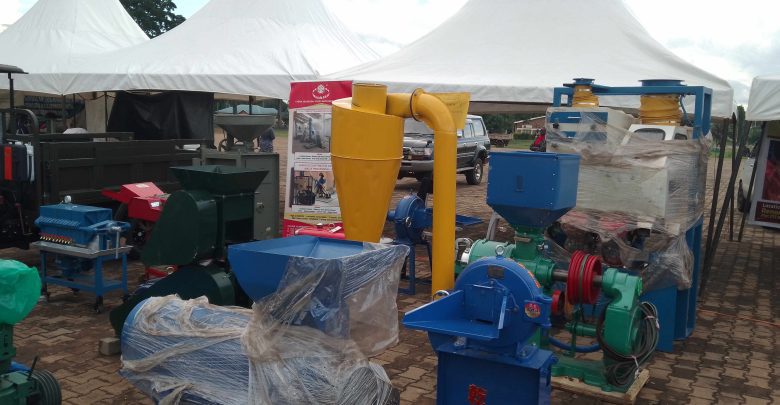
The Northern Uganda Trade Show featured MTN’s new gear aimed at promoting smart climate agriculture. This initiative helps farmers connect to the internet, market their products, and boost productivity in the Acholi Sub-Region. Through MTN’s network and MoMo services, farmers can take photos of their produce, share them online, and easily carry out financial transactions.
The trade show, held from March 26 to 30, 2026, drew over 100 exhibitors. MTN concentrated on initiatives to assist more than 26,000 farmers in Northern Uganda. They use the MTN MoMo network to facilitate information sharing and marketing of agricultural products.
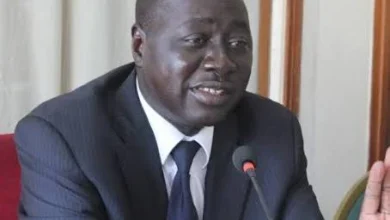
During the 5th Edition of the trade show, our correspondent interviewed Opiyo Peter Paul to learn more about MTN’s support for farmers via MTN MoMo. Opiyo stated that MTN aims to connect businesses with farmers. He explained that farmers need to modernize their farming methods. They should showcase their products using technology.
He added that MTN’s ICT department provides devices to help farmers with their business activities. One such device is the Wakanel 46 Min Limited M305P120. This device allows farmers to connect laptops, mobile phones, and other gadgets to the internet. Opiyo said, “This device helps farmers connect with laptops and mobile phones to reach their customers.”
He stressed, “Farmers can buy this device to connect to the internet. They can take photos of their farm products for marketing using the MTN network.”
Opiyo mentioned that MTN collaborates with farmers due to the convenience of MTN MoMo services. He noted that MTN MoMo “helps farmers with financial transactions easily.” He added that MoMo allows farmers to open accounts that serve as mobile wallets and savings tools. These can be accessed by dialing star 155 and using their assigned merchant codes.
Our correspondent also spoke with Nathan Emuron, a GIZ specialist, who discussed GIZ’s efforts to support farmers in Northern Uganda. Nathan mentioned, “I specialize in finance and financial services. I work for GIZ to promote rural development in Northern Uganda. We offer training and technical assistance in climate agriculture.”
He added that GIZ trains farmers in marketing, finance access, business support, and tax compliance with URA. As he said, “We also train groups in governance.”
Nathan began working with farmers in Northern Uganda in 2023 and plans to support them until 2028. GIZ currently assists 23,000 farmers in the region. He highlighted that one of their achievements is that farmers can now showcase their products at trade shows like the Northern Uganda Trade Show.
However, Nathan pointed out that climate change remains a significant challenge for farmers. He noted that global warming has altered rainfall patterns, causing unpredictable seasons. He recalled that in 2023, rainfall began late in June. He explained, “Many farmers who planted their crops expecting rain in March found themselves facing drought due to the late rainfall.”
When asked about mitigation efforts, Nathan mentioned that GIZ is planning interventions to help farmers manage climate risks. He emphasized the importance of the Northern Uganda 5th Edition Trade Show in supporting farmers. He said, “This event is vital. It helps farmers, as agriculture supports over 80 percent of households in Uganda. Despite its potential, the country remains one of the poorest in the world. To improve rural development and food security, Uganda must address inefficient farming practices.”
He added that Uganda needs to increase access to modern agricultural technology, diversify rural economies, and enforce responsible land policies. Nathan also noted that over 90 percent of household energy comes from biomass, which contributes to climate change and air pollution. He stated that Uganda should adopt renewable energy, promote energy efficiency, and enhance rural electrification to reduce climate risks.