
CulturesEnvironmentGlobal Politics
UGANDA: INDIGENOUS KNOWLEDGE TO SUPPORT ENVIRONMENTAL DEGRADATION ON DARUGH AS OVER 100 PEOPLE PERISH
Former Acholi spiritual leader on Acholi taboo

Research on the indigenous knowledge system that protects the environment (VISO), commissioned by the Voluntary Weather Support Organisation, is a holistic initiative aimed at understanding how ecosystem information is needed to eradicate environmental degradation and support road construction.
The information collected on indigenous knowledge especially on how African traditional culture used to protect environment and mitigating the taboos caused by rainfall. In a similar respect, there were species of trees, animals, and birds that were prohibited to be killed or eaten. In addition, in the past domestic violent was not allowed during dry season as it was considered a taboo.
GULU CITY-TUESDAY AUGUST 4, 2026
By Okumu Livingstone Langol, (Uganda Correspondent)
The Voluntary Initiative Support Organization (VISO) looked at and dug deeper into the root back to the Acholi Traditional Cultural norms through the taboo protection of indigenous trees, birds and animals that were at the center of preservation of environmental degradation.
Acholi Sub Region has bone the mark of anger that so far has killed dozens of children and older people amidst prolonged dry spell that occurred in the months of May, June and early July.
Between May and August 2026, the world remembers the prolonged dry spell in the Acholi Sub-Region that triggered a severe food security shortage crisis, that led to hunger-related death and widespread malnutrition, research finding from Uganda Correspondent.
“The Agago District recorded 12 people reported to have succumbed to death from hunger-related causes. Lamwo District recorded 8 death and 126 hospitalizations linked to food shortage.”
As the hunger strike continued, 10 Chairman of Local Government Councilor 5, including all the Local Councilors III, of the Acholi Sub Region gathered in Gulu City, in press.”
The conference in the office of Northern Uganda Media Club (NUMEC), turned up to a loudest cry, Local Leaders attributed the food crisis to months of failed rains, crop failure and declining household food supplies, highlighting the devastating humanitarian impact of the prolonged drought on vulnerable communities.
Our Uganda Correspondent carried out Market survey in Gulu City, at Cere-leno Market and Layibi Central Cuk Cabbage, a weekly market rates show the followings:
Market survey in Gulu City at Layibi Cuk Cabbage and Cere-leno market
| Items | Kilograms | Cost in Shillings | One bag cost |
| Beans | 1) kilogram | 3500-45000 | 350,000-450,000 |
| Maize | 1) Kilogram
|
2,000 | 200,000 |
| Millets | 1kilogram | 3,000 | 300,000 |
| Groundnut | 1) kilogram | 6,000 | 600,000 |
| Cow piece | 1) kilogram | 4,000 | 400,000 |
| Rice supper | 1) 1 kilogram | 4,500 | 450,000 |
| Ordinary | 1) Kilogram | 4,000 | 400,000 |
| Maize floor | 1) Kilogram | 3,000 | 300,000 |
Gulu Mian Market commodity price
Food Items at
| Items | 1) kilogram | cost | |
| Cow Pieces | 1) kilogram | 8,000 | |
| Millets | 1) kilogram | 8,000 | |
| Sorghum | 1) kilogram | 3,000 | 300,000 |
| Ground Nut | 1)kilogram | 8,000 | 800,000 |
| Horney | 1) kilogram | 20,000 | A tin of 20 kg 100,000 |
| Simsim Peats | 1) kilogram | 10,000 | |
| Rice | 1) kilogram supper
Ordinary |
5,000
4,500 |
-500.000
-450,000 |
Our Uganda Correspondent caught up with VISO researcher on-one-one interview and asked him: you are aware that Hunger killed dozens of people in Northern Uganda and prices of food items rose up, what is your take on this?
Ashby Patrick, the Director of VISO, in his response stated this; yes, I’m very much aware of the prevailing situation of food shortages devastating the region. But it’s just now how we can respond to it so that the similar situation does not happen again. Part of the problem comes from the way we have treated or misused nature (surrounding environment). Part of the response should be to return to the past. With the past I mean the ways the African traditional society applied indigenous knowledge to preserve, protect weather and rain patterns.
“Our ancestors used to preserve, protect and saved the environment though the Taboo, for example; when the food got scarce, when the rains took long to rain, or when the hunger happened; it was considered a taboo that required something to be done to mitigate it. The Luo/Acholi used to address these calamities through rituals as cleansing rivers, hills, checking deity to speak why the calamity is happening.
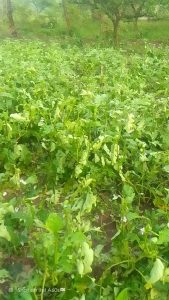
this part of Acholi taboo
File photo
However, when you look at Northern Uganda today, the environmental degradation that heavily occurred between 2007 and 2018, before President Museveni Presidential Executive Order Number 3 of 2023 and number 2 of 2025 to back up the traditional methods, northern Uganda has suffered erratic rain fall patterns that are difficult to explain.” Ashby Patrick Okee observed.
He stressed that, the indigenous knowledge used to be passed from the elders to the young generation, this indigenous knowledge was used as taboo to protect (Yaa) Shea Nut trees, (Beyo), Africana Afrizela, (Tido) Mahogany tree including Fauna and Flora that are African Medicines industries and wetland were protected.
Acholi/Luo taboo were prohibited and preserved to the protection of Rivers, Lakes and Streams water bodies which served as sacred places, no one would drain water body for his or her personal interest.
The Acholi/Luo used the fear of taboo to protect water springs, wells, or block the stream and rivers, no one would temper with the water bodies, the likes of Wang It or water channels including wetlands, because such taboo caused death or calamity to particular society.
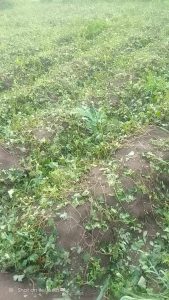
over 100 acres of beans, Cassava and Beans have rendered worthless
File Photo
The Acholi/Luo also prohibited any member of community to kill birds that were regarded as very special and future massagers during tranquility and vagabond.
“Birds like Lapainut, whenever it cried or passed through the Acholi Sub Region, portrayed the sign that long dry spells would occur. Lapainut bird would erect its nest within the area and lay her eggs and while the eggs are in incubation the rain would cease to rain until her eggs hutch and chicks begin to fly; is when the rainfall occurred.
The researcher also narrated that, there were animals that the Acholi Traditional culture prohibited to be killed during planting season. For example, a reptile called (Adece). These reptiles are common during planting season and famers had to be observant as they tilted their land because it was considered a taboo to hit or huck it with a hoe. once it bloods spilled, there would be prolonged dry spell.
According to Acholi Spiritual leader of Puranga Chiefdom, Okello William Wilberforce aka Ojuny Anyanya, the spiritual spokesperson of Olal Teng Puranga’s deity. Things like domestic violence were prohibited, any man who fight his wife during raining season, was fined a Cock, any woman who sundried her household food staffs with (Odero) shiver, committed a taboo and such a woman, was fined a hen.
“There were also other decrees of the Acholi/Luo traditions norms that prohibited spilling bloods during farming season, anyone who caused blood shedding during planting season was liable to produce a H-goat or a Ram for cleansing purposes.”
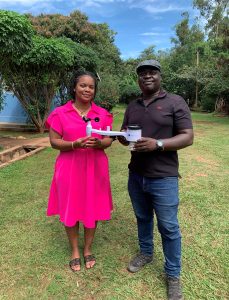
Photo By Okumu Livingstone Okumu
Okello William Wilberforce Ojuny, in a statement stated that, in Puranga to enforce traditional cultural norms, Olal Teng Deity, requires its subjects to appear at the Deity, in every onset of cultivation season in the month match, every year, to come to collect Millets seeds.
So, does the Acholi Taboo that need to be revise, one of such taboo norms is the protection of the environment’s degradation through Africana Afrizela, the fauna and flora, domestic violent one such traditions culture was committed, there was heavy downpour with storms. And when particular trees spices were cut no rain.
“Whoever, want to cut Tido, Beyo or yaa, must provide the reason behind it, and when the community agree, he or she must come with H-Goat.”
Ashby Patrick Okee in his conclusion argued that we are doing this to learn the indigenous knowledge of Acholi/Luo, to integrate with the formal environmental protection system.
Indigenous knowledge is practice using to live with our environmental, in the past we didn’t have the laws to protect the wetland, but because wetland contained fauna and flora which was under the curvet of taboo.
We are using ambient weather station for monitoring rainfall pattern in Acholi sub region to help the farmers in their indigenous knowledge to predict rainfall patterns.
We need to put Ambient Weather station in all parishes within the Acholi Sub Region.
During the short interview, Natasha Moore, a researcher in Gulu City on Sociology was introduce how the ambient weather station would collect amount of rainfall and monitor weather focus through WIFI and relate back though monitoring system.
As part of understanding our echo system, there is need to integrate indigenous knowledge in the efforts to mitigate the climatic and environmental degradation