Global Politics
UGANDA: MEMBER OF THE PARLIAMENT OF ACHOLI REGION, SAY THEY WILL REJECT THE PROPOSED PROTECTING SOVEREIGNTY BILL-GILBERT OLANYAH
Impact on remittances (the $2.5 billion lifeblood)

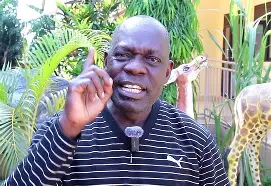
The Ugandan government is proposing the Protection of Sovereignty bill, 2026, a highly controversial draft law aimed at regulating foreign influence over domestic policy, governance, and public affairs. The Bill, which was tabled in parliament in April 2026, aims to shield national interests from external interference, but faces criticism for its broad definition, heavy penalties, and potential impact on Civil Society and economy” Hon Gilbert Olanya, the Kilak South MP for the 12 parliament, Amuru District is one of the longest serving Acholi MP running for 25 years as an MP for Forum for Democratic Change (FDC).
The government says we don’t want the reparation of the economy, my fellow Ugandans, let’s say no to the sovereignty bill.
GULU CITY. MONDAY, APRIL 20, 2026
By Okumu Livingstone Langol, Our Correspondent.
Alone Member of Parliament for Kilak South, Amuru District, Northern Uganda. Hon. Gilbert Olanya stood tall, a big tree in the Acholi Sub-Region, to challenge the Oligarchy of President Museveni’s 40-year rule. Saying no to protect the Sovereignty bill.
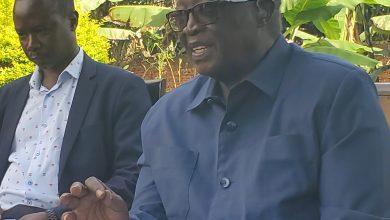
Hon Gilbert Olanya told Northern Uganda Media Club, the Sovereignty Bill, which was brought before the floor of Parliament, was against the rule of proceeded, we are closing the 11th parliament within two weeks from now; the law says all the bills that were brought in parliament, at the end of the parliament term, must be withdrawn.
“According to parliamentary rules of proceedings, when the parliament term ends, this means we are ending the parliament, we are surprised, as the National Resistance Movement (NRM). In the Kyankwanzi caucus meeting that took place forth nigh ago came up a new bill, they are coming up with a new bill. This is contradictory.
The government is stealing money. I am one of the Committee, I am going to sit down this week, and we are going to make sure we block the Protecting Sovereignty Bill. Now the government says if you want to send money to your relatives, you must be cleared by the Ministry of Finance and Economic Development.
“I call for the Acholi community, let this Bill be rejected, do you want your Dollar and Pound Sterling to be cleared by the Minister? And yet the Ministry of Finance controls money laundering through money laundering controls money coming from Uganda.
As MPs, we are not going to allow the new Bill, there standing order that new bills be withdrawn, now we are withdrawing bills, the government is bringing new bills.
Fights on the floor of parliament, when the NRM regime claimed to control and protect the Sovereignty, and yet 90 per cent of resources come from the outside. Uganda has to flash back to 1975, economic crimes.
The press conference was call by Gulu NGO to address the Uganda on the proposed protecting sovereignty bill that is today being presented in parliament of Uganda to for the second reading.
A threat to all: the universal danger of the protection of sovereignty bill 2026.
What does this bill really mean for you?
The Cabinet has approved a draft National Sovereignty Bill (also referred to as the Protection of Sovereignty Bill, 2026). While framed as a move to safeguard national interests, critics warn it is a “North Korean-style” shift toward total state control that will isolate Uganda, cripple the economy, and punish ordinary citizens.
What is the protection of sovereignty bill?
The proposed National Sovereignty Bill, 2026 (formally the Protection of Sovereignty Bill) was developed by the Ministry of Internal Affairs and approved by Cabinet on March 23, 2026. The Bill ostensibly seeks to operationalize Article 1 of the Constitution of Uganda, which enshrines the sovereignty of the people. This memorandum provides a rigorous legal and socio-economic analysis based on the draft version presented by the Minister of Internal Affairs to the NRM Parliamentary Caucus on March 27, 2026, and subsequently endorsed. According to the Minister’s memorandum, the Bill intends to address the following national challenges:
- Unregulated digital influence and cyber vulnerabilities;
- Foreign aid tied to conditionality’s and parallel programming; and
- Inadequate regulation of NGOs and foreign-funded civil society organizations.
Is this bill necessary?
No. Legal experts argue it is redundant. Uganda already uses the Anti-Money Laundering Act, the Penal Code, the Anti-Terrorism Act, and the Financial Intelligence Authority (FIA) to monitor illicit cash flows. This Bill adds only unnecessary red tape and a tool for state overreach.
Why is it being criticized?
The Bill is considered autocratic because it undermines financial transactions regardless of intent. By placing blanket restrictions on fund transfers, it threatens to suffocate Uganda’s liberalized economy and drive away development partners.
How does it compare globally and regionally?
While the Government claims to benchmark Western models, the laws in the US, UK, and Canada are built to protect private property and due process— protections entirely missing from this Bill. Instead, this legislation mirrors the restrictive “foreign agent” frameworks of Russia, North Korea, Georgia, Hungary, India, Kyrgyzstan, and Nicaragua, where such laws historically led to the criminalization of family remittances, the freezing of private bank accounts without trial, and a mass exodus of venture capital. Furthermore, while the Minister suggests similar frameworks were considered in the region, our neighbors Kenya and Rwanda actually maintain open, pro-growth policies that actively drive development through diaspora engagement, rather than restricting the very capital inflows that build the middle class. On the entire African continent, Uganda is the only country that is considering such a bad law.
Who is affected by the Bill?
It affects virtually all Ugandans, specifically: The Diaspora: Reclassified as “foreigners,” stripping them of inherent citizenship rights and dual-citizenship protections. Local Families: Labeled as “agents,” they face heavy fines or imprisonment for receiving funds without prior ministerial registration. Professionals & Institutions: Impacts lawyers, accountants, banks, NGOs, and faith-based organizations (churches/mosques) that receive foreign funding or provide essential services like health and education.
The content of the bill
- Impact on remittances (the $2.5 billion lifeblood)
In 2025, diaspora remittances reached $ 2.5 billion, outperforming many other sectors. Placing “North Korean-style” restrictions on citizens bringing their own money back to grow the economy is counter-productive and risks an immediate economic slump, for an economy that has long been in dire straits/channels.
- a threat to job creation and the “green pasture”
Uganda does not create enough jobs for its citizens. By requiring rigorous income declarations, this Bill effectively discourages Ugandans from traveling the world for work, even though the state cannot provide an alternative at home. It also kills millions of local jobs in construction and farming that are directly funded by Ugandans in the diaspora.
- Impact on the Ugandan diaspora’s citizenship
The Bill classifies over a million Ugandans residing abroad as “foreigners.” This includes citizens visiting for an extended period of time such as students, those working abroad, those on medical visits for an extended period of time, Ugandan refugees in other countries, and Ugandans with dual citizenship. This violates the 1995 Constitution and disregards dual citizenship laws, stripping them of their inherent rights, regardless of their political thought or affiliation.
- Impact on Foreign Direct Investment (FDI) Uganda’s liberalized economy is at risk. Excessive red tape and financial restrictions will discourage global investors. To reach middle-income status by 2030, we need more investment, not laws that chase investors away to neighboring countries.
- Economic & banking “chokepoints“
The Bill requires Ministerial approval for any grant, loan, or investment exceeding UGX 400,000,000. This bureaucracy will paralyze cross border financial transactions, including mobile money networks and other financial transfers and signal to the world that Uganda is “closed to business.”
- Crisis for Family Welfare and Social Services.
Millions of Ugandans depend on those living in the diaspora for living expenses, including school fees and medical bills. This Bill will restrict these vital transfers, leaving relatives back home to suffer. It also blocks entrepreneurs from setting up businesses due to the complications of transferring start-up capital.
- Impact on faith-based & religious institutions.
Churches, Mosques, and Temples that receive foreign funding for hospitals, schools, and social programs will be hit hard. By restricting these funds, the Bill forces communities to suffer where the government is often unable to provide these essential services itself.
- Impact on Non-Governmental Organizations (NGOs) NGOs providing clean water, legal aid, and advocacy will be categorized as “foreign agents.” This leads to a “brain drain” of partners and leaves the most vulnerable Ugandans without a vital safety net. The Minister of Internal Affairs would even have powers to limit foreign funding annually.
- Threat to Government Revenue and the Tax Base.
By discouraging FDI and diaspora remittances, the Bill indirectly shrinks the national tax base. While the Uganda Revenue Authority (URA) seeks to increase domestic revenue mobilization, this Bill threatens the very economic activities that generate taxes. A shrinking economy means less money for public services, forcing the government to eventually impose even higher taxes on the few struggling citizens left in the formal sector.
- Harsh Penalties & Specific Offenses.
The Bill creates new crimes, such as acting for a foreigner without registration. Punishments are excessive: (i) Individuals: Fines up to UGX 2,000,000,000 (Two Billion) or 20 years in prison, or both. (ii) Corporations: Fines up to UGX 4,000,000,000 (Four Billion).
Appeal/plea to stakeholders:
A unified front is required to ensure engagement on the Bill:
(a) For the Media: Act as the primary information shield. Journalists and outlets should simplify the Bill’s clauses for the public—especially via radio—to show how it affects the “common man,” and provide a platform for legal experts to voice the constitutional dangers without censorship.
(b) For the Diaspora: Despite being labeled “foreigners,” the diaspora must lobby international partners and human rights bodies to highlight the risks to FDI. They should also form unified blocs to petition the Ministry of Foreign Affairs, asserting their rights under existing dual citizenship laws.
(c) For Citizens: Organize local petitions and engage your Area MPs directly. It is vital to publicly document and share how the Bill impacts family remittances and private household freedoms.
(d) For the Private Sector: Business leaders must issue joint memorandums through their associations, such as PSFU, KACITA, Gulu Market Vendors Association, and UMA, among others, highlighting that the Bill makes Uganda “high-risk” for international banks and global investors.
(e) For Development Partners: Conduct formal reviews of aid effectiveness and communicate clearly to the government that this Bill creates an environment incompatible with international standards of cooperation, human rights and commitment to implementing SDGs and achieving vision 2030.
- Conclusion
The Protection of Sovereignty Bill, 2026, represents a calculated effort to overthrow the 1995 Constitution by shifting power from the people to executive agencies. By dismantling the constitutional safeguards that protect individual liberties, the Bill replaces collective self-governance with unchecked authority.
Uganda’s sovereignty belongs to the people, not state agencies.
Balington Ongwec, rebottled, we shall protect sovereignty, says, “Early in 1975, Amin published the economic crimes decreed. It established a military court called the Economic Crimes Tribunal, whose judges were empowered to punish profiteers, hoarders and others who acted against the economic interests of the state.”
This led to the collapse of President Amin’s tyranny, and the development of the economy indicated by the flow of the foreign currency Dollar and the pound sterling.
Added, the government should think of fighting corruption rather than controlling the foreign economy, when the U.S President Donald Trump, with the same protecting sovereignty, it is still going on. Uganda is still being affected. Are we providing for Uganda?
“On January 20, 2025, President Donald Trump signed the proclamation. “Guaranteeing the state’s protection against invasion” is a key initiative aimed at reinforcing national sovereignty. This order, along with others signed in 2025, prioritizes securing the Southern border, suspending the entry of illegal aliens, and protecting state sovereignty from federal oversight.”
The government says we don’t want reparation of the economy, my fellow Ugandans, let’s say no to the sovereignty bill.
Balington Ongwec, the Councilor V, for Gulu District, African strong economy the likes of Egypt, Morocco, Nigeria and Ethiopia, are still strong on the liberation of their economy.
We have Ugandans who are selling tourists’ attractions, but we are saying no.
Article 1 of the Uganda Constitution says power belongs to the citizens. If the political Society, the MPs, Civil Societies and the media stand together, we will say no to the Protecting Sovereignty Bill.
Ugandans must question the Ministry of Finance Intelligence Authority to validate how much foreign currency is being received from the foreign exchange through our citizens who are sending the remittance back home. If they are Civil Society Organisations, they are affected. Many of them have been closed, including Capture 4, which was closed in 2021; the reason for the closing of Capture 4, the reason was not known.
“Preventing Uganda from having dual citizenship, it will affect non-patrician media practitioners who talk to create an arrangement which is not clear. Indians, other foreigners who are trading in Uganda, this is a wake-up call, its clarion call.
Abonga Moses, the former Mayor of Gulu City, Laroo-Pece Division, the current chairman of People Front Freedom Party (PFF), Gulu City, reacted to this protecting sovereignty bill, which is a bill we just pray our Members of Parliament should reject and curtsied their real services. The Protecting Sovereignty Bill is to push Ugandans into a big ditch.
“This bill is against the opposition, the Media, and the civil society organisations. This bill is going to curtail the freedom of association, which we are already enjoying ourselves. Any money which is going to be sent from outside Uganda is useless; they want to have a monopoly and bring Ugandans down,” Moses Abonga reasoned.
Kizza Oscar, Lawyer from Gulu City, joined Ugandans appealing to them to reject the Protecting Sovereignty Bill and the financial tax bill. Arguably, there are many bills in parliament, and when you want to withdraw your money, they will charge beyond a percentage.
The new Bank bill they now want to withdraw depends on 00.025 percent. When you want to withdraw your 1 million shillings, they will tax you 25,000 shillings.
For example, the Bujagali Hydropower Dam has been given tax waiver holiday for 6 years until 2032, they will not pay income tax, the money Uganda is losing UGX 105 billion total money until 2032, they will not pay excise duty tax The government proposed to increase diesel and Petrol by UGX 200, adding the current petrol price that is now, UGX 560PER litter.
The government also proposed to introduce an excise duty by 0.25 percent of the value of your money, depending on the percentage. Every transaction will depend on how much you are withdrawing, and when we focus on the war in Iran, which will increase the fuel cost. You need a cooperation agreement for five years, this is what the Bank bill says.
In the Protecting Sovereignty bill, the National Resistance Movement regime wants to be the only beneficiary of the foreign aid.
“The government wants to clear Ugandans staying outside Uganda as foreigners, according to what the Protecting Sovereignty Bill says.” Kizza Oscar stressed.
What is the impact of the sovereignty bill?
Counsel Kizza Oscar says the impact of the sovereignty bill, for us, the bill is to de-Empower Ugandans, the cost of living will go up, and people will pay more taxes in the area where they need tax. Depending on the tax base, the government wants to tax you more, which is a regressive tax measure.
“The 1995 Uganda Constitution covered that, the most sovereignty of the country is with the citizens, not the government.” Counsel Oscar Kizza gave reason to reject the sovereignty bill
For example, we got a 10,000 Dollar government to simplify the law, from the grant to the donor that I would not name. When provided proof that is not money, the government wants to tax us. We say no.