Global PoliticsHealth
UGANDA: MEDICAL HEALTH WORKERS SHUNNED AND OUTLAWED AFRICAN RICH TRADITIONAL MEDICINE

“We are trained in Western Medicine; we have nothing to do with African Hubal medicine. Get out of your cultural demonic African medicine, Hubal.” Gulu Regional Referral Hospital Secretary, outlaw.
GULU CITY- TUESDAY, NOVEMBER 17, 2026
By Okumu Livingstone Langol, (Uganda Correspondent)
The Acholi/Luo theory (Okumu Langol 2026-Lak ma taa, aye Ngwee the white teeth have a pungent smell). Uganda medical fraternity has turned their back from African traditional cultural medicine from treating illness that can be cured by Herbal medicine.
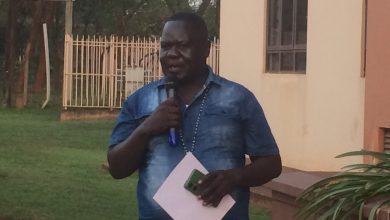
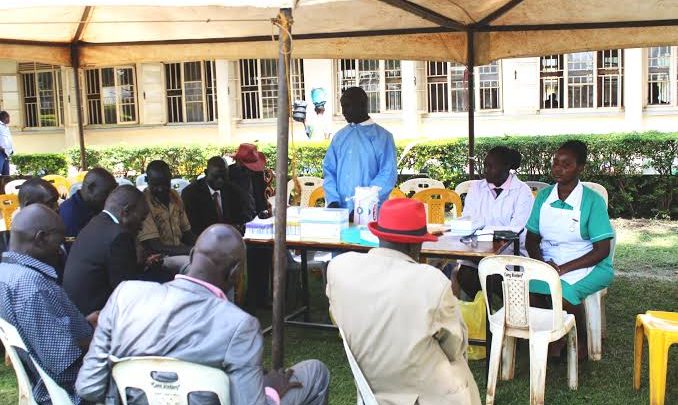
Tuesday, November 2026 was the day Gulu Regional Referral Hospital organised the community Hall Baraza discussion that attracted no community of Gulu City, with the exception of 17 Northern Uganda Media Club members and staff of Gulu Hospital.
Our Correspondent put to task, Gulu Regional Referral Hospital Mr. Walter Uryek-Wun serves as the Principal Assistant Secretary (Principal Hospital Administrator) and board minutes secretary, because Western medicine undermined African medicine.
Mr. Walter Uryek-Wun, first of all, did not pick up on the question, but dove into his narrative by outlining why the Hospital organised Community Hall Baraza; he argued that, today, November 17, we called our Baraza to help us with accountability in terms of public demand that we give our medical health services for the community to raise issues that our services affect them.
Our mandate is to provide human resources and drug supply to the community. They believe we have a lot of the stock over, the government pays for our services, and we have to give our services as part of the accountability to the community. No staff should ask for money from our clients who are the patients.
“Any payment must be a receipt; if not, that would be treated as theft or corruption. Don’t pay money to anybody; we shall monitor and arrest anyone who breaks the government rules and regulations of the public services.”
The issues of customer care, the issues of inter-participation, the staff gaps. Gulu Regional Referral Hospital is operating at a 29 per cent staff ceiling. However, the government has raised the cavate on recruitment, Gulu Regional Referral Hospital we have been given 60 slots to recruit our staff, and the government has allocated UGX 4 billion.
Currently, Gulu Regional Referral Hospital has 14 consultants. Since Gulu Hospital was in existence, we have never reached and got that number of consultants, the Hospital has 8 slender gasses, and we are building perimeter wall, the government has allocated UGX 350 million, in the past even dogs just walk and come eat food from the hospital. When we come here, we are looking for positive issues; I am appealing to the community to talk to medical staff with humility.
Olympia Lamunu, the Human Rights Defender, raised a number of issues; first, she commented that the hospital, in a short time, has seen progress.
Gulu Hospital has staffing gaps in terms of sign language because we have impairment, the Debt who do not speak. We need to have a sign language interpreter particularly Dr. Ojara the Deputy Hospital Director I appreciate you for your commanded servers for treating accident cases.
Thus, the team of employees do not observe smooth paths, especially when I have my patient when I am rolling her with a wheelchair; the patient gets injured because of the rough way. Why not construct the path for disabled people too?
Olympia Lamunu asked, I want some guidance here: the payment fine which the hospital security has been getting, why does the management receive it. Where does the money go? The payment for penalties that people pay is unknown; they do not know where the money goes.
Thirdly, the management can recruit qualified medical personnel, but do the medical personnel know customer care and ethical value? How can the medical personnel treat the trauma? Mental health illness.
Acak ki kwene? Aceng Monica, the patient of Gynecology has been in Gulu Regional Referral for one week, without getting X Ray, although the medical Doctor has recommended that unless she acquires X Ray examination she will be operated on.
Aceng Monica, 44 years old, hails from Unyama Sub County, Gulu District, asked the Secretary Administrator why they have been in queue for a week without getting medical services, explaining that there only one X-Ray operator expert in Gulu Regional Referral Hospital, is there any way that the Hospital get to recruit more staff, to avoid that messes.
Mr. Uyrek-Wun, in his response commented that they have been in a meeting to solve the issues of X-Ray staff, and they agreed that there is a need to recruit personnel to help in the X-ray function; otherwise, Aceng’s concern will be worked on.
Finally, the Hospital Secretary was put to task: why has African traditional medicine been ignored, and yet cancer can be cured. Most of all the Western Medicine they get their raw materials from African indigenous trees, flora and fauna.
Why do not process African Hubal medicine, instead, this very African traditional medicine remedy is picked from our backyard, taken to Germany, and when Ugandans seek medical help, will get the same medicine. This is decolonizing African knowledge: the Contribution of African Flora and Fauna and Indigenous medicine to Global Pharmaceutical Development.
Mr Uyerk-Wun’s explanation falls short, and it depicts a deeper lack of understanding when he referred to Our Correspondent that demonic spiritual belief, Gulu Hospital Administrator has to be aware that a particular medicinal plant or herbal preparation, a traditional treatment system, and a specific indigenous remedy used for particular illnesses would help establish the cultural authenticity of the argument and make the proposed research academically strong.
Therefore, the Acholi/Luo cultural expression “Lak ma taa aye Ngwee” translated as “the white teeth have a pungent smell” provides an interesting metaphor for examining the contradictions between institutional appearance and underlying realities in contemporary healthcare.
The expression challenge’s us to look beyond outward appearances and question whether institutions that present themselves as centers of scientific excellence have adequately recognised the indigenous knowledge system that contributed to human medicine development.
There is a growing concern that African traditional cultural medicine has not received the recognition it deserves within Uganda’s formal healthcare environment. For generations, African communities have accumulated knowledge about medicinal plants, animals derived substances, roots, leaves, bark, seeds, minerals and other natural resources.
This knowledge was developed through observation, experimentation, cultural experience, and intergenerational transmission. It originated outside Western scientific institutions.
Africa as a source of global pharmaceutical knowledge
One important historical contradiction is that African biodiversity has contributed to the development of pharmaceutical compounds used in modern medicine, yet the indigenous communities associated with some of the resources have not always received sufficient recognition.
The pharmaceutical industry has historically investigated natural products from different parts of the world, including Africa. Scientists isolate active chemical compounds from plants, investigate their biological activities, modify chemical structures, and sometimes develop medicine from them.
A particularly important example is the Madagascar periwinkle (Catharanthus roseus). This African plant became internationally significant following research that identified anticancer treatments, including the treatment of certain leukemias and lymphomas. Interestingly, Malagasy traditional healers had used the plant for generations before its international pharmaceutical significance became established.
Another example is the Calabar bean (Physostigma venosuma), historically associated with the Efik people of present-day southern Nigeria. European scientists investigated the plant during the nineteenth century and isolated physostigmine, also known as eserine. The compound subsequently found medical applications, particularly in ophthalmology, including the treatment of glaucoma. Its history illustrates how indigenous African knowledge and biological resources contributed to the development of modern pharmaceuticals.
These examples demonstrate that African plants have contributed more than raw biological materials. They have provided chemical compounds derived from the back of the West and Central African tree, Pausinytalia yohimbe and ouabain, a cardiac active compound associated with African Strophanthus species. These compounds have attracted pharmaceutical and pharmacological research, although their medical uses, safety profile, and regulatory status differ considerably.
However, Dr. George Okot, the Consultant who also measures in African Indigenous medicine intervened argued that we are all aware that er have a complement of African Traditional healing medicine; the traditional hubs have been their council. It has been professionalized, the traditional medicine is now being deal with by research, in one of the Acholi here they have their structure because when you go to the higher the traditional hubs remedy are in practice.
“President Museveni signed the Agreement with Uganda Traditional Medicine, recognising them. Also, I know one of the clans in Acholi: when you get a fracture or an accident they can treat you very well, besides Western medicine ”