Global Politics
UNITED KINGDOM: THE PROHET AND THE PRESCRIPTION: PAULO MUWANGA’S 1990 PROPHECY AND THE CONSOCIATIONAL DEMOCRACY AGREEMENT
The prophecy as a class confession

By F Latigo-Nono
Paulo Muwanga’s 1990 statement before the Human Rights Commission is one of the most quoted—and least analysed—prophecies in Ugandan political history. It deserves analysis, but not because Muwanga was a seer. It deserves analysis because of who he was, what he represented, and what his prophecy reveals about the class dynamics that the Otunnu–Salim Saleh Consociational Democracy Agreement (CDA) claims to address. Muwanga’s statement is not a neutral prediction from outside the political system. It is a confession from within the political bourgeoisie—a confession that the class he belonged to could not sustain the system it had built. The CDA, by contrast, is a prescription from within the same class for managing the contradictions that Muwanga identified. The comparison between the two is not a comparison between a pessimist and an optimist. It is a comparison between two class documents: one that admits the system’s fragility, and one that proposes to stabilize it.
What follows situates Muwanga historically, decodes his prophecy into its three component claims, tests those claims against the record from 1990 to 2026, compares them to the CDA’s implicit and explicit responses, and draws out what the comparison reveals about the limits of both.
—
- Who Was Paulo Muwanga, and Why Should We Care?
- The prophet’s credentials
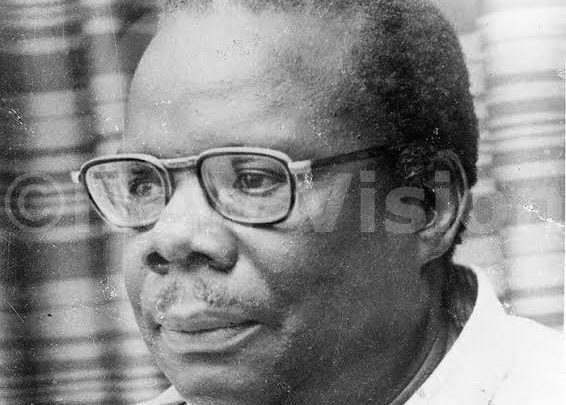
Paulo Muwanga was not a marginal figure. He was a central actor in Uganda’s postcolonial political bourgeoisie. He served as Chairman of the Military Commission of the Uganda National Liberation Front (UNLF) in 1980—the body that governed Uganda between the fall of Binaisa and the December 1980 elections. He was the official who announced the results of those elections, declaring Milton Obote the winner in circumstances that the Democratic Party and Yoweri Museveni’s Uganda Patriotic Movement rejected as fraudulent. He served as Vice President under Obote II from 1980 to 1985. When the National Resistance Army took power in January 1986, Muwanga was sidelined—detained, questioned, and eventually released into political retirement. By 1990, when he appeared before the Human Rights Commission, he was a defeated and marginalised figure of the old political class.
This history is essential to interpreting the prophecy. Muwanga’s claim that he knew Museveni “inside-out” was not empty boasting. He had worked with Museveni in the Military Commission. He had seen Museveni operate during the 1980 election crisis. He had been Museveni’s colleague, then his rival, then his prisoner. His “inside” knowledge was real—but it was the knowledge of a rival fraction of the same class, not the knowledge of an impartial observer.
- The prophecy as a class confession
The statement has three components. First, that Ugandans were “jubilating” without understanding what awaited them—a claim about false consciousness, about the population’s inability to see through the political bourgeoisie’s promises. Second, that by 2060 “the country will have lost all its possessions and national assets”—a claim about primitive accumulation, about the transfer of public wealth into private hands. Third, that “the political class will [be] divided one against the other” and “Uganda will be ruins”—a claim about intra-class conflict and institutional collapse.
These are not the claims of a democrat. Muwanga had presided over the 1980 election that most observers considered rigged. He was not warning Ugandans about authoritarianism because he believed in popular sovereignty. He was warning them about a rival authoritarian—one who, in his view, would be more effective at consolidating power than the UPC had been. The prophecy is a class confession: the political bourgeoisie, through one of its own, admitting that its mode of rule was unsustainable, that its assets were being liquidated, and that its internal divisions would produce collapse.
- The dialectical irony
The deepest irony of Muwanga’s prophecy is that he helped create the conditions for the outcome he predicted. His declaration of the 1980 election results, widely seen as fraudulent, triggered the guerrilla war that brought Museveni to power. In the dialectical sense, the old political bourgeoisie produced its own gravedigger. Muwanga’s later marginalisation was not an accident; it was the consequence of the intra-class conflict he had helped to ignite. The prophet was also a participant, and his prophecy was partly a post-hoc rationalization of his own defeat.
This irony matters for evaluating the CDA. The Agreement is being proposed by a different fraction of the same class—the security-commercial fraction represented by General Salim Saleh, with scholarly legitimation from Professor Otunnu. The question is whether this fraction can succeed where Muwanga’s fraction failed: whether it can stabilize the political bourgeoisie’s rule without reproducing the intra-class conflict that Muwanga predicted.
—
- Decoding the Prophecy: Three Claims
- “Lost all its possessions and national assets”
The first claim is about accumulation by dispossession. Muwanga was predicting that the political bourgeoisie, under Museveni, would transfer public wealth—land, parastatals, natural resources, state enterprises—into private hands, primarily those of the ruling coalition and its allies.
This is the most empirically testable of the three claims, and the record from 1990 to 2026 is mixed but substantially supportive of Muwanga’s prediction. The privatisation programme of the 1990s transferred dozens of state enterprises to private owners, often at prices and through processes that critics argued favoured connected buyers. The Uganda Commercial Bank was sold to a foreign bank after a controversial bidding process. The country’s forests, fisheries and wildlife resources have been subject to concession arrangements that have enriched connected elites. Land—the most fundamental asset—has been transferred from public and customary tenure into private and commercial tenure at a scale that Muwanga would have recognized.
More recently, the oil sector has become the most significant test. The development of Uganda’s petroleum resources—the East African Crude Oil Pipeline (EACOP), the refinery project, the upstream production agreements—has been structured through contracts and agreements that have not been fully disclosed to Parliament or the public. The beneficiaries include international oil companies, the Ugandan state, and a network of local elites whose role in the sector is opaque. The “national asset” of oil has been transformed into a set of private and semi-private arrangements that are difficult to distinguish from the general pattern of state-dependent accumulation.
The military has been a significant vehicle for asset transfer. The UPDF has been involved in commercial activities—construction, security contracting, land acquisition—that blur the line between military function and private accumulation. The Kapeeka Industrial Park, the Chobe Safari Lodge, the various enterprises associated with General Saleh, are examples of the security-commercial fraction’s role in converting political-military power into economic assets. The National Enterprise Corporation (NEC), the UPDF’s commercial arm, has expanded its operations in ways that would have concerned Muwanga—though Muwanga’s concern would have been about who was accumulating, not whether accumulation was happening.
Muwanga’s prediction was not that assets would disappear. It was that they would be transferred—from public ownership to private ownership, from the state to the political bourgeoisie. On this, the record substantially confirms him.
- “The political class will [be] divided one against the other”
The second claim is about intra-class conflict. Muwanga was predicting that the political bourgeoisie would fragment into competing factions, each seeking to capture the state and its resources, and that this fragmentation would produce instability.
The record from 1990 to 2026 confirms this prediction with almost uncanny precision. The NRM’s internal history is a history of factional conflict: the “moderates” versus the “historicals” in the early 1990s; the Besigye split in 2001; the emergence of the “Muhoozi project” and the succession question in the 2020s. Each faction has drawn on different regional, ethnic and institutional bases within the political bourgeoisie. Each has competed for control of state resources, appointments, contracts and security positions.
The 2026 election results are the most recent evidence. President Museveni’s 71.65 per cent national victory masks a more complex regional picture: the NRM’s gains in Buganda (57 parliamentary seats against NUP’s 39) and the post-election cabinet’s allocation of 20 of 81 ministerial appointments to Buganda are classic mechanisms of intra-elite accommodation. They distribute positions and recognition to regional elites while preserving the fundamental structures of state-dependent accumulation. This is not the absence of division; it is the management of division through patronage.
But the management of division is not the same as its resolution. The succession question—who will succeed Museveni, and from which faction of the political bourgeoisie—remains unresolved. The Muhoozi project has generated its own dynamics, with the general’s public statements and political ambitions creating a separate pole of attraction within the security elite. The opposition, meanwhile, has its own internal divisions—NUP’s relationship with other opposition parties, the role of the “People’s Front for Freedom” and other formations, the question of whether to participate in or boycott elections.
Muwanga predicted that the political class would be “divided one against the other.” He was right. What he did not predict—or perhaps did not care to specify—was that the division would be managed through the distribution of state resources, and that this management would become the central mechanism of political stability.
- “Uganda will be ruins”
The third claim is the most apocalyptic, and the most difficult to evaluate. What does “ruins” mean? Physical destruction? Institutional collapse? Economic failure? Moral decay?
If “ruins” means physical destruction—war, infrastructure collapse, humanitarian catastrophe—then Uganda by 2026 is not in ruins. The country has experienced sustained economic growth, has rebuilt infrastructure, has expanded education and health services, and has not experienced the kind of large-scale conflict that characterised the 1970s and 1980s. The NRM’s achievements in ending insecurity in most of the country, establishing local council structures, restoring cultural institutions and pursuing negotiated settlements with armed groups are real, and the Otunnu–Saleh paper is right to acknowledge them.
If “ruins” means institutional decay—the hollowing out of state institutions, the erosion of accountability, the capture of regulatory bodies, the decline of public services—then Muwanga’s prediction is more plausible. The Auditor General’s PDM audit found widespread diversion and ghost projects. The electoral process is widely regarded as compromised. The anti-corruption institutions are under-resourced and politically constrained. The education and health systems are underfunded and unequal. The public debt has risen to 115.4 trillion shillings, with debt service absorbing 43–45 per cent of domestic revenue. These are not the marks of a country in ruins, but they are the marks of a country whose institutions are being hollowed out.
If “ruins” means the destruction of national assets—the transfer of public wealth into private hands—then Muwanga’s prediction is substantially confirmed. The country’s land, forests, fisheries, minerals and oil have been transferred or committed to private and semi-private arrangements at a scale that would have been unimaginable in 1990. The national debt is a claim on future public resources, transferred to creditors. The “national assets” that Muwanga warned would be lost have not disappeared; they have been reallocated—to the political bourgeoisie, to foreign investors, to the military-commercial complex.
Muwanga’s “ruins” is best understood not as physical destruction but as the destruction of the public realm—the transfer of what belongs to all into the hands of a few, and the resulting inability of the state to serve the majority. On this reading, Uganda is not yet in ruins, but it is on a trajectory that Muwanga would have recognized.
—
III. The CDA’s Implicit Response to Muwanga
- The CDA acknowledges the symptoms but not the diagnosis
The Otunnu–Saleh Consociational Democracy Agreement is, in effect, a response to Muwanga’s prophecy—though it does not cite him. Its entire architecture is designed to address the three problems Muwanga identified: the transfer of national assets (through transparency, PDM reform and land mediation), the division of the political class (through the Elite Cooperation Chamber), and the risk of collapse (through inclusion, monitoring and sunset clauses).
But the CDA’s response is symptomatic rather than diagnostic. It treats the division of the political class as a problem of institutional design—if only the elites had better mechanisms for cooperation, they would not divide. It treats the loss of national assets as a problem of transparency—if only the public knew what was happening, the assets would not be lost. It treats the risk of collapse as a problem of inclusion—if only the grassroots were brought into the cooperation, the system would be stable.
What the CDA does not do is ask why the political class is divided, why national assets are being transferred, and why the system is at risk of collapse. It does not ask because the answers would implicate the class that commissioned the document. The political class is divided because its fractions compete for control of state resources—that is the nature of state-dependent accumulation. National assets are being transferred because that is how the political bourgeoisie accumulates—through the conversion of public wealth into private property. The system is at risk of collapse because its material basis—the extraction of surplus from peasants and workers, the transfer of public assets to private hands—is unsustainable.
- The CDA proposes to manage what Muwanga predicted
The CDA’s Elite Cooperation Chamber is, in effect, a mechanism for managing the intra-elite conflict that Muwanga predicted. It brings the parties together, gives them a forum, and creates procedures for resolving disputes. It does not address the underlying competition for state resources; it channels that competition into a more orderly form.
The CDA’s transparency provisions—written agreements, public disclosure, independent monitoring—are, in effect, a mechanism for managing the transfer of national assets. They do not stop the transfer; they make it visible. A public land register, a published cooperation agreement, an audited PDM account—these are improvements in accountability, but they do not change the underlying property relations. The assets are still being transferred; the public is simply better informed about the transfer.
The CDA’s inclusion provisions—the grassroots chamber, the youth seats, the religious leaders’ role—are, in effect, a mechanism for managing the risk of collapse. They give the excluded a voice, a seat and a stake in the system, thereby reducing the likelihood of the kind of rupture that Muwanga predicted. But they do not give the excluded the power to stop the transfer of assets or the resolve the division of the political class. They give them voice without power.
- The CDA’s class blind spot
The deepest problem with the CDA’s response to Muwanga is that it is written from within the same class that Muwanga was warning about. Muwanga was a member of the political bourgeoisie. The CDA’s co-authors are members of the political bourgeoisie—one of them, General Saleh, is a leading figure of the security-commercial fraction that Muwanga would have recognized as the beneficiary of the asset transfer he predicted. The CDA is not a response from outside the system; it is a management strategy from within it.
This is why the CDA cannot ask the questions that Muwanga’s prophecy raises. It cannot ask who owns Uganda because the answer would implicate its authors. It cannot ask who benefits from the transfer of national assets because the answer would include the co-author’s own accumulation projects. It cannot ask why the political class is divided because the answer would reveal that the division is not a failure of cooperation but a structural feature of state-dependent accumulation.
—
- Critical Comparison: Where Muwanga Was Right, Where the CDA Is Right, Where Both Are Wrong
- Where Muwanga was right
Muwanga was right that the political class would be divided. The record from 1990 to 2026 confirms this with almost monotonous regularity: the Besigye split, the Muhoozi project, the NUP’s rise, the NRM’s internal factions, the opposition’s own divisions. He was right that national assets would be transferred—the privatisation programme, the oil contracts, the land acquisitions, the military-commercial complex. He was right that the population would be “jubilating” without understanding what awaited them—the NRM’s early popularity, the 2026 election’s regional arithmetic, the continued support for a system that transfers public wealth to private hands.
But Muwanga was also wrong in significant ways. He implied that the outcome would be a single, catastrophic collapse—”Uganda will be ruins.” The actual trajectory has been one of managed decline: not a sudden collapse but a gradual hollowing out, punctuated by crises (the 2001 Besigye split, the 2021 election violence, the 2026 electoral credibility crisis) that are contained rather than resolved. He implied that Museveni would be the sole author of the catastrophe—”I know President Museveni inside-out.” The actual dynamic is more complex: Museveni is a manager of the system, not its sole author. The system has its own logic—the logic of state-dependent accumulation—that would persist beyond any individual leader.
- Where the CDA is right
The CDA is right that the division of the political class, the transfer of national assets and the risk of collapse are real problems that need to be addressed. It is right that past elite pacts failed because they excluded the grassroots, and that a new pact must be more inclusive. It is right that transparency, monitoring and sunset clauses are improvements over the opacity of previous cooperation agreements. It is right that land mediation, PDM reform and education investment are necessary components of any serious attempt to address the material drivers of sectarian mobilisation.
But the CDA is right in a reformist sense, not a transformative one. It proposes to manage the problems that Muwanga identified, not to resolve them. It proposes to make the system more stable, more transparent and more inclusive, but not to change its fundamental property relations. It is a better version of the same system, not a different system.
- Where both are wrong
Both Muwanga and the CDA share a common blind spot: the peasants and workers of Uganda. Muwanga’s prophecy is about the political class—its divisions, its assets, its collapse. He does not mention the peasants and workers except as the “Ugandans” who are “jubilating” without understanding. They are objects of his prophecy, not subjects. They are the audience for his warning, not the agents of their own liberation.
The CDA shares this blind spot, though it dresses it in the language of inclusion. The peasants and workers are represented in the CDA through elite intermediaries—the Inter-Religious Council, the Elders’ Forum, the Women Situation Room, NOTU—not as organized class actors with their own power. The CDA’s grassroots chamber is a chamber of NGOs, not of mass organizations. It gives the peasants and workers voice, not power.
Both Muwanga and the CDA are class documents from the political bourgeoisie. Muwanga’s is a confession; the CDA is a prescription. Neither is a programme for the peasants and workers. Neither asks what the peasants and workers need, what they want, or how they would organize to get it. Neither treats them as the subject of history rather than its object.
- The deeper question
The comparison between Muwanga and the CDA raises a deeper question: can the political bourgeoisie reform itself? Muwanga’s prophecy suggests not—the political class is divided, the assets are being transferred, the trajectory is toward ruin. The CDA suggests that it can—through better institutions, more inclusion, more transparency, the political class can manage its contradictions and stabilize its rule.
The historical record suggests that both are partly right and partly wrong. The political bourgeoisie can manage its contradictions—it has done so for four decades, through a combination of coercion, co-optation and tactical accommodation. But it cannot transcend them—the divisions, the asset transfer and the risk of collapse are structural features of state-dependent accumulation, not accidents of poor design. The CDA may succeed in managing them more effectively, but it will not resolve them. Muwanga may be right that the trajectory is toward ruin, but he underestimated the system’s capacity for managed decline.
—
- Conclusion: The Prophet, the Prescription and the Missing Class
Paulo Muwanga’s 1990 prophecy is a class confession—the political bourgeoisie, through one of its own, admitting that its mode of rule is unsustainable. The Consociational Democracy Agreement is a class prescription—the same class, through a different fraction, proposing to manage the contradictions that Muwanga identified. The comparison between the two is not a comparison between a pessimist and an optimist, or between a prophet and a planner. It is a comparison between two moments in the political bourgeoisie’s self-understanding: the moment of confession and the moment of prescription.
Muwanga was right about the trajectory: the political class is divided, national assets are being transferred, the system is being hollowed out. The CDA is right about the symptoms: the divisions are real, the asset transfers are opaque, the risk of collapse is genuine. But neither addresses the root cause: the class structure that produces the divisions, the transfers and the risk. Neither treats the peasants and workers of Uganda as the subject of history.
The missing class is the point. Muwanga’s prophecy is about the political bourgeoisie, not about Uganda. The CDA is about the political bourgeoisie, not about Uganda. The peasants and workers are the “Ugandans” who are “jubilating” in Muwanga’s account, and the “grassroots” who are to be “brought on board” in the CDA’s account. They are the object of both documents, not their author.
A genuinely transformative response to Muwanga’s prophecy would not be a better consociational agreement. It would be the organization of the peasants and workers as an independent political force—capable of contesting the political bourgeoisie’s control of the state, of stopping the transfer of national assets, and of building a different system. The Acholi Parliamentary Group’s resistance to Divinity Union was a glimpse of what that might look like: parliamentary elites acting as genuine representatives of peasant class interests, mobilizing popular resistance and exercising a veto. But the APG was regional and defensive; it stopped a project, but it did not build a system.
The CDA does not build that system either. It builds a more comfortable version of the system that already exists—one in which the political bourgeoisie manages its contradictions more effectively, and the peasants and workers are given seats at a table where the decisions have already been made. Muwanga’s prophecy will be fulfilled not because the CDA fails, but because it succeeds—on its own terms, which are the terms of the class that commissioned it. The ruins Muwanga predicted are not the ruins of physical destruction. They are the ruins of a public realm that has been transferred, piece by piece, to private hands—and the CDA proposes to manage that transfer, not to reverse it.