InvestmentNational
UGANDA: BIG WINDOW OPPORTUNITY TO INVEST IN NORTHERN UGANDA FOR BOTH INDIGENOUS AND FOREIGN INVESTORS; WHAT’S NEXT?

Local investors shunned the northern window opportunity for investment, citing harassment from the Uganda Revenue Authority (URA).
Give all equal window opportunities for investment to both foreigners and indigenous, but do not support aliens, and allow real estate construction to construct high tower buildings in Gulu City.
GULU CITY-MONDAY JUNE 8,2026
By Okumu Livingstone Langol, (Uganda Correspondent)
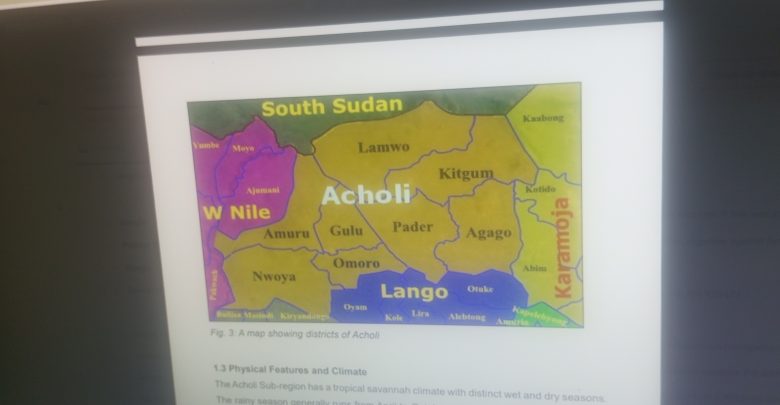
Despite its history of conflict and limited economic infrastructure, the Acholi sub-region has unique
comparative and competitive advantage in the sectors of agriculture, livestock, fishing, forestry, mining, trade, tourism and energy.
Availability of Land
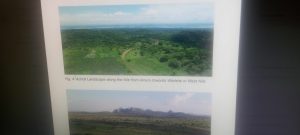
Kenneth Oketta Akena, the lead researcher from the Office of the Prime Minister based in Gulu City, while appearing on Radio Mega 103 FM, a local radio station in Gulu a couple of months ago, argues to the community in Acholi Sub-Region that the Acholi sub-region is endowed with vast, fertile, and largely flat arable land that remains underutilized.
Highlight that this presents immense potential for investments in mechanized commercial agriculture, livestock production, and agro-industrial development. Historically, settlement patterns in Acholi were clan-based, with land acquisition and distribution overseen by clan leaders. Some leaders were hereditary royals known as Rwot, while others served as Ludito Kaka (clan leaders).
These leaders allocated land to their subjects, enabling families to live together in defined localities. This system shaped the foundation of Acholi land use, where the Rwot or clan leaders demarcated land for communal purposes, including farming, grazing, and settlement. Since Uganda’s Independence in 1962 and with the coming into force of the 1995 Constitution, the nature of land ownership in Acholi has evolved. Today, the dominant land tenure systems in the sub-region are Customary, Freehold, and Leasehold, with customary tenure being the most widespread. Customary land refers to land in Acholi that is not registered under the Registration of Titles Act, nor is it vested in the local or central government. A related concept is communal land.
Land jointly held by multiple families and managed by a clan-appointed leader on behalf of
Such land often includes grazing grounds, hunting areas, cultural and ceremonial
sites, forests, markets, playing fields, and other public-use spaces.
Although most land in Acholi is customarily or communally owned, it can be converted into
freehold or leasehold through processes overseen by the District Land Board. In addition, privately
titled land exists within the sub-region, allowing owners to sell, lease, or rent their property to
investors under agreed terms. In urban areas such as cities, municipalities, and Page town councils, land is formally planned and subdivided into smaller plots, typically not exceeding one acre, to support structured development.
Favorable Weather
The Acholi sub-region has a tropical savanna climate with distinct wet and dry seasons. The rainy
the season typically runs from April to October, with peak rainfall in the June to September period,
while the dry season occurs from November to March, marked by high temperatures.
Temperatures can reach up to 35°C during the hotter months, and the region receives significant
annual rainfall, often exceeding 1,000mm, though the dry spells can be challenging for agriculture.
Rich Flora and Fauna
Acholi sub-region has significant tourism opportunities anchored on diverse ecosystems ranging
from wildlife, cultural heritage, religious and adventure activities. Murchison Falls National Park in
the sub-region and the nearby Kidepo Valley National Park provide visitors’ an experience of four of the big five animals – lion, leopard, buffalo, and elephant.
Rich Culture and History
The very rich Acholi cultural tapestry comprises songs, dances, cuisine, and folklore; historical
and religious sites such as Fort Patiko, Guruguru Caves and Daudi Okello and Jildo Irwa Martyrs
The shrine provides visitors with great opportunities for adventure tourism. Significant opportunities
therefore, exist in the Safari Lodges and Hotels, safari travel, restaurants, among others for visitor
accommodation and entertainment.
Existence of Minerals, Oils and Gas
The sub-region has significant oil reserves reported to be 60% of the country’s current exploration
Beyond the upstream investments, opportunities exist for downstream investments.
Other opportunities are in the vast mineral resources found in the sub-region.
Access to Markets
Northern Uganda’s geographical location gives it a strategic advantage in accessing both regional
and international markets. The Gulu-Nimule Highway, which connects Northern Uganda to South
Sudan, provides a direct route for exports to the burgeoning South Sudan Page | 15
market. Additionally, the Gulu-Nwoya-Arua-Koboko route, leading into the Democratic Republic of
Congo (DRC), offers access to the West and Central African markets. Improved transport
infrastructure in these corridors have significantly reduced transportation costs and enhanced the
competitiveness of exports.
Besides regional markets there are local markets in all major urban centers for selling of produce
and general merchandise with a huge population of buyers. Gulu City and Kitgum Municipality have
huge market facilities attracting traders from all over Uganda and South Sudan. Acholi sub-region
has two modern market facilities built by the government in Gulu City and Kitgum Municipality. They
provide outlets for sales of agricultural produce and other merchandise from across the countries.
They attract traders from the whole region. There are other smaller markets in the local
governments for both produce, animals and general merchandise.
Elego one border stop Centre between Uganda and the South Sudan border point.
Gulu main market.
In Acholi, there are markets for a wide range of products and services, besides access to markets in
South Sudan, Democratic Republic of Congo and other East African Community Countries.
Committed Leadership and Robust Governance
Policy
In 2019, Uganda was ranked 135 to 127 out of 190 economies that reported improvements at the
ease of doing business by the World Bank. The government has put in place investor-friendly policies,
including tax incentives and simplified procedures that have significantly lowered the cost of
doing business. Uganda has a predictable investment environment and a fully liberalized economy.
National Development Plan
Investment promotion in Acholi sub-region contributes to Uganda’s Vision 2040, the Ten-Fold
Growth Strategy and the National Development Plan IV; the government is prioritizing Agro-
industrialization, Tourism development, Mineral development, and Science, Technology, and
Innovation (ATMS). These initiatives that emphasize regional equity, infrastructure development
and industrialization provide the impetus for sustainable investments. The region has been
earmarked for industrial parks, agro-processing zones and tourism development under various
national and donor programmes.
Strong Local Governments
With the adoption in 2006 of promotion of Local Economic Development as the sixth objective
decentralization and in 2014 the LED Policy, the government demonstrated its intention of promoting
investments at the sub-national level. The establishment of the LED and Investment Committees
in local governments from 2022 further demonstrates the government’s resolve in this regard. With
the LEDICs, local.
leaders have embraced private sector-led investments as the engine for growth in their localities.
The local administration in Acholi sub-region is aligned to Uganda’s decentralized system of
governance whereby local governments have power and autonomy to manage certain functions
and provide services that are prescribed by the government in areas of: land, education, health,
roads, water and sanitation etc. Each local government has a Land Board, Investment Committee
and Local Economic development committee, to mention but a few, to coordinate investments
and development in their area of jurisdictions.
Available Labor
With the relatively high number of the population in the working (18-59) age group, the Acholi
sub-region offers an abundant and flexible supply of labor for deployment in the various
investments. The Universities and other institutions of learning, the sub-region’s workforce
continues to demonstrate capacity for knowledge-based industry.
Graduates from Gulu University & products from Oding Skilling Centre, he concluded.
Acholi businessmen downplay the notion of investment opportunity in Acholi Sub Region.
Gulu Local Government Councilors rebuffed the notion of the window opportunity to invest in Acholi Sub Region; the councilor’s changed Mr Kenneth Oketta Akena, the lead officer from the OPM, who claimed and carried out the research on the investment opportunity, argued, if true, why have the local investors from the region been denied investment.
“The Government of Uganda has been giving zero URA tax-free grace period for 5 years while heavily taxing local investors while favoring international and foreign investors, a case in point. After the Northern Uganda conflict in 2008, over 50 Acholi investors abandoned their political asylum and returned to invest in the region. However, the government of Uganda levies heavy taxation; as we talk now, only 20 out of 50 Acholi from the diaspora who have proven to be resilient, although they are suffering and not benefiting from zero government taxation (sic).” Lakwo Nyero Denies the Councilor for Gulu District Representing people with Disability (PWD) decried.
Lakwo Nyero Dennis added, when we invest, the investment of the brain, first of all, we have academic manpower based on knowledge. Whether foreign investors come with a lot of money, there is no need for capable investment, but we have greedy people. When you see I am Bindman, I was working with Norwegian Refugee Council as Project Officer. When I was involved in a motor accident, the mob justice descended on me; I was one of the investors, politicians from Acholi Sub Region abandoned me, but do we have the brain?
When the research findings indicated land as a factor of production, land is also a factor of production, but do the findings indicate so, and if so, does the Acholi community in Northern Uganda name me how many of them are counted among the lists?
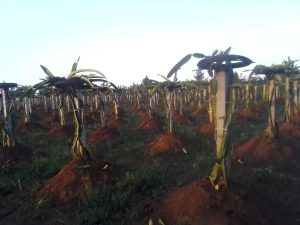
Christine Oryema Labobo, she is an investor based in Abwoc Sub-County, Omoro District; she has a dragon fruit farm, Piapai Farm, an avocado farm and an apple farm. Christine Oryema Lalobo is one of the Acholi investors who will not come out publicly to expose her investment for fear of being hunted.
Acellam Dennis, the Local Council 1 of Lacankwite village, Layibi-Bardege Division, downplayed the issue of the big window opportunity in Acholi Sub-County based on a number of reasons. Argued the investment cannot be there in Acholi Sub Region when the leaders are engaged in conflict; development needs a greater mind.
“The leadership in Acholi Sub Region voted in 2021-2026, who were in the 11th Parliament, were a shame to the region; even the Chairmanship of the Local Government Council failed to offer tangible things that can be remembered as their legacy. They were not good leaders; their roles have been a patrician National Resistance Movement leaning that produced conflict workmanship based on colleagues, those with a simple mind; they were leading by divisionism.”
Acellam Dennis, we had Dr. Kenneth Omona, the very brilliant person, but because of Divisionism leaders failed to used his office, a case in point when President Museveni issued Presidential Directive No. 2 of 2025 (formally issued as Executive Order No. 2 of 2025) is a directive by Ugandan President Yoweri Museveni that bans the unregulated, free-range movement of nomadic cattle herders (the Balaalo) into Northern, Eastern, and North-Western Uganda.
The directive targets the movement of migratory pastoralists who transport their livestock across rural-to-rural areas. The President aims to prevent crop destruction, stop environmental degradation, and resolve violent conflicts over communal land.
What happened when the state minister for Northern Uganda, Dr. Kenneth Omona, was fired, the Balaalo migrants from Northern Uganda made a big celebration. Are taking stocks for the migrants, and cord name them a big window opportunity for investment in Acholi Sub Region.
“What I know from the indigenous people in Acholi Sub Region who want to invest in real estate construction, for years in Gulu City, they have been blocked from constructing more than five stories; are those not what the community calls investment.”
We have Dr. Toya Kilama, for World Health Organization, (WHO) based in Germany, he was stopped not to construct 10 story building, Kakanyero Investment in Gulu City who owned Kakanyero Hotel he was stopped too, Mak Kweri Investment in real estate building was stopped. And Okello Alobo, who 10 years ago wanted to construct a 10-story building in the then Gulu Municipality, was stopped.
Give all equal window opportunities for investment to both foreigners and indigenous people, but do not support aliens, and allow real estate construction to construct high tower buildings in Gulu City.