National
UGANDA: THE POST-WAR DISPLACEMENT AND EMPLACEMENT IN GULU CITY-GULU UNIVERSITY DON
Analytical and Methodological Framing,

“Drawing from the empirical cases of displacement and emplacement (entrenchment) of post-war young people in Gulu city, we enhance a shift from conflict-related displacement theorized within the context of war, to a peace-displacement trajectory. Consequently, the case and demonstration of displacement (re-displacement) into Gulu city in the times of peace.
Particularly focusing on; the trans-temporal visualization (imagined futures), social character of fleeing and displacement, entrenchment and emplacement, should make us rethink our dominant causal model of a conflict-related displacement.”
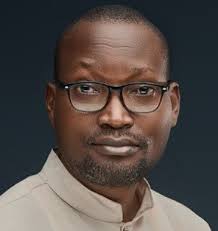
Assoc. Prof. Daniel Komakech is the Chief, Directorate of Research and Graduate Training, Gulu University, Uganda.
GULU CITY-THURSDAY, July 23, 2026
By Okumu Livingstone Langol, (Uganda Correspondent”
We sought to unsettle the dominant episodic causality model of war-related displacement, to a complex and cyclical displacement that occurs in both times of war and peace (Purdekova, 2016, 2023). By implication, we therefore interrogated the singular notion of war as a problematic category or unit of analysis in understanding displacement.
The analytical and methodological framing research carried in Gulu City by Daniel Komakech and Ms. Florence Anek, the Deputy Chief of Party, Magister Curia, Uganda their Verbatim analytical
So thus, “The objective was to complicate the linear causality and its analytical model that characterizes dominant literature, on war-related displacement. We demonstrated instead, how peace as well, is co-constitutive in the understanding of displacement, just as much as war is.
This is particularly important when uncertainties define the peace, which makes people choose instead, to flee peace by getting re-displaced.
Drawing from the empirical cases of displacement and emplacement (entrenchment) of post-war young people in Gulu city, we enhance a shift from conflict-related displacement theorized within the context of war, to a peace-displacement trajectory. Consequently, the case and demonstration of displacement (re-displacement) into Gulu city in the times of peace.
Particularly focusing on; the trans-temporal visualization (imagined futures), social character of fleeing and displacement, entrenchment and emplacement, should make us rethink our dominant causal model of a conflict-related displacement.
This research work is a result of a one-year fieldwork carried out in Gulu city between January to November 2024. Drawing upon primary data of in-depth ethnographic field case stories, interviews and studies of four (4) interlocutors (young people) and their family members (spouses, kin and kith).
We locate this study in the broader urban anthropology and the intersection between urban and conflict studies. We argue that the subject of post-conflict displacement and imagined emplacement in urban spaces has been under-studied.
While building on direct observation and being an insider, we foreground the young peoples’ sensibilities and tactics to navigate and negotiate a social becoming and approved presence. The objective was to situate a critical assessment of the impact of post-conflict displacement and imagined emplacement in Gulu city.
Consequently, how precarious situations are reproduced, re-igniting an intense sensibility and tactics to acquire and retain emplacement. The geographical area of Gulu city as a case study, was chosen to provide an empirical basis to appreciate the complex nature of displacement, emplacement and the modes required to attain a social becoming by the young people.
The research drew from a range of formal to informal engagements. The followings were widely utilized; observation, listening to stories and narratives, interviews, and followed four (4) cases, in a case studies mode.
We therefore solicited about 20 young people in the city, and a diverse set of people, including, 10 opinion leaders, 10 members of the security, 10 local leaderships in the divisions in Gulu city, 10 community members and 4 case studies. The informal engagements with; a few colleagues that came over for coffee, talking with boda-boda riders as they take me to my destination, casual chats with friends, over the issues of displacement and emplacement, were insightful. This took the shape of casual chats and reflections over coffee, boda-boda riding, taking a walk or hanging around.
The jokes, remarks, individual or ‘special’ requests (for money to help in treating a child or relative), were fruitful as well. It was the case that, the less structured the engagement, the natural, relaxed and therefore, the better the replies. Similarly, the opportunity offered by informal engagement, allowed for asking and clarifying many more questions, making the perspectives clearer or deeply reflected upon.
To be able to appreciate and understand the field data, we sought interpretation and translation from the local Gulu city setting. In the same vein, the observations were reinterpreted in the context in which the behavior, actions, words and voices were performed. The cityscape of Gulu was not simply a geographical place of being located, but space to read and learn.
To protect informants, their identities were anonymized or, use of pseudonyms was preferred. Lastly, the study makes no claim to total insights. Rather, it tries to capture some insights as much as possible. The limitations of the study are as follows: It did not cover the whole of northern Uganda but, rather, specific to Gulu city. As such, it did not focus on the national phenomenon of displacement and emplacement. In the section that follows, we very briefly theorize the genealogy of displacement and emplacement. The objective is to provide background narrative, debate and entanglements.