
National
UGANDA: A REKNOWN ALICE OLOYA ALIPAYO, A WIDOW CELEBRATED HER 91ST BRITHDAY IN GULU
“For me my staying long is because I have been a farmer and hard work has kept me longer.”

.
GULU-UGANDA. On Saturday November 2nd 2019, there was a big do in Pece Lukung of all places in Gulu town.
There was melody of bird’s songs and Bwala royal dances including Laraka Raka Acholi youth courtship dance paraded in the small compound of Mrs. Alica Oloya Alipayo. What was is it all about? A birth day celebration of 91 year old Mrs. AliSa Oloya.
A baby was born by a mother called Lapura Karasolina of Jaka clan in Puranga on 28th October 1928 at Puranga, Owca village currently Parwech parish in Puranga sub County Pader district.
Sitting next to her from right was her sister’s son called Jacob Oulanyah a.k Oulanyah Luranga and from her left hand side was Bishop Johnson Gakumba, the Bishop of Anglican Church Northern Uganda nurturing Mrs. Alisa a new baby in the home.
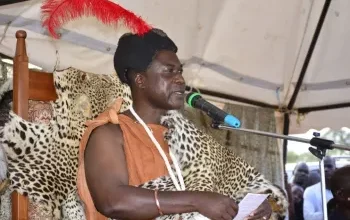
In the birth day Party, also came Rwot Okwanga Yusuf Adek, Rwot Pageya, who was ushering in with his contingent that included; his two wives, an aide and an escort.
The Pageya chief did not join the baby’s high table, but was put in a strategically exposed area.
Rwot Adek, came little later, but before he stepped into the celebration ground, his arrival was broadcasted, that soon we are going to receive Rwot…
Rwot Adek who was escorted with Bwala royal dance, the mood in the home showed that there were four big elephants in the home; first came Mrs. Alica Oloya, who walked from the house, Bishop Johnson Gakumba who arrived early, then Jacob Oulanyah who deserved royal escort and then the Pageya chief Rwot Adek.
One of the big elephants would have been Opiyo Oloya, who could have been among the big five, but odo mabor peneko twol, distance failed him.
Mrs. Alica says the secret of her longer stay is due to the support of the farm they opened in Pamin yayi in 1954 with her husband the late former teacher Oloya Alipayo and a politician who turned a farmer, adding that they were growing tobacco, which was labour intensive and demanded hard work. Although, they had 11 workers whom they employed in the tobacco farm, she had to work her everyday in the farm besides serving her husband.
She however, said when she left farming in 1970s she started not feeling well, she developed illness but because of her earlier hard works, she has been able to stay longer.” “Nyak pa” Laura move the audience.
In her brief speech to the gathering she wished all the people who graced her 91st birth day by saying in her own words “Today I am going to sleep well, because of your presence. May God bless all of you, and you go back well.” She concluded her prayer.
Jacob Oulanyah praised Mrs. Alica that she is a very courageous mother, he gave a brief account saying one day when he went to visit them in the USA, and she dared one policeman who came to check on some issues in her home.
“This mama Alica sitting here, I never knew that she could speak good English, one day a police officer came and entered in her house. She spoke to that police officer challenging him what he wanted in their home, and why, speaking American accent. Oulanyah says.
Oulanyah appealed to Mrs. Alisa that we still all need you to stay for more years to come, arguing that how about those older people who die at 125 years old.
Olanya told Achomo the daughter that “Look after your mother, Alica praised God that is why she has lived longer.
Bishop Gakumba equally admired Alisa’s birth day, saying when he and his wife went to visits Achomo the daughter of the new baby today in the USA, he was impressed with the way he found Alisa and her daughter saying that even from the USA they ate local and traditional dishes like Malakwang, boo, rec agara as if we are in Acholiland.
“He added that even when he went to Bristol City she always fed him and others with all sorts of Acholi food stuffs, in his last prayer, he asked God to give Alisa more years.” Prayed Bishop Gakumba
Bishop Gakumba equally admired Alisa’s birth day, saying when he and his wife went to visits Achomo the daughter of the new baby today in the USA, he was impressed with the way he found Alisa and her daughter saying that even from the USA they ate local and traditional dishes like Malakwang, boo, rec agara as if we are in Acholiland.
“He added that even when he went to Bristol City she always fed him and others with all sorts of Acholi food stuffs, in his last prayer, he asked God to give Alisa more years.” Prayed Bishop Gakumba