EducationEntertainmentGlobal Politics
UNITED KINGDOM: THE ROMA GROUND TESTAMENT
Part IV: the first allegation-the shield impunity

By FL-Nono
—
PROLOGUE: THE ROAD TO APAC
The Lango sun is a patient fire,
It climbs the sky like a slow desire,
It burns the grass to a golden thread,
And it counts the living, and it counts the dead.
It falls on the road that winds and bends,
On the boda-bodas and the market friends,
On the cassava fields and the mango trees,
And the tired, faithful, dust-brown breeze.
It falls on Apac, and Apac wakes
With the sound of the day and the deals it makes,
With the sound of the hoe and the bicycle bell,
And the stories the elders refuse to tell.
For there are things that are known and never said,
Things that are buried and never dead,
Things that are whispered by the water pot,
Things that the poor remember, and the powerful forgot.
And on this Thursday, the twenty-sixth
Of November, the sun began its tricks
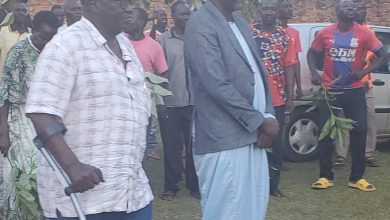
On the Boma Ground, where the people came,
And the afternoon learned a different name.
For the Minister of Local Government,
Honourable Balaam Barugahara, went
Through the Lango sub-region on a mission plain—
To expose the corrupt and the common pain.
They called it the accountability rally,
And it gathered the people from every valley,
From Apac town and the village ways,
From the market stalls and the schoolyard days,
From the clinics where the queues stand long,
From the places where the people have learned a song:
The song of the ones who pay and pay,
And get a little, and lose the day.
—
PART I: THE BOMA GROUND
The Boma Ground is an open hand,
A patch of earth where the people stand,
Where the district speaks and the people hear,
And the important men come near.
There are plastic chairs for the honored guests,
And the sun beats down on the people’s chests,
And the tents are white, and the banners bright,
And the microphones are set just right.
But under the tents and behind the chairs,
There is a truth that the ground still bears:
The truth of the mother who walked all day,
The truth of the father with nothing to say,
The truth of the pupil who sits on the floor,
The truth of the patient outside the door,
The truth of the bribe that was never written,
The truth of the people who are quietly smitten.
The rally began with the usual words,
The greetings, the clapping, the songs of the birds
Of the district choir, and the speeches long,
And the people nodded and hummed along.
For they had heard the speeches before,
And they knew the dance, and they knew the score,
And they knew that after the words were done,
The same old road would still be run.
But then came a moment the ground had stored,
A moment the years had long ignored,
A moment that rose from the dusty floor,
And walked to the microphone, and opened a door.
—
PART II: THE MAN WHO STOOD
His name was Patrick Obonyo.
A plain name. A name the records know.
A name that the district could surely trace
To a village street and a simple place.
He was not a man of a lofty frame,
But he walked to the front and he said his name,
And the crowd went quiet, and the sun stood still,
And the truth climbed up on the Boma hill.
He was not a lawyer, not a chief,
Not a man who had brought the district grief.
He was not a politician’s son,
Not a man with a title or a gun.
He was a resident, that was all,
A man who had answered the people’s call,
A man who had watched and a man who had seen,
And a man who was tired of the in-between.
He wore no shield and he wore no vest,
He had no escort from the east or west,
He had no bodyguard at his side,
No promise of safety, no place to hide.
And he said it plainly, before them all,
So that the great and the small would hear the call:
“I do not need any special protection.
I do not ask for a guard’s direction.
I am not afraid for my personal safety.
I am afraid of the silence, mainly.
I am afraid of the things unsaid,
The things that the poor carry in their head,
The things that are known and never spoken,
The promises made and always broken.
“I have not come here to seek a favour.
I have not come here to be a saviour.
I have come to speak for the ones who cannot,
For the patient, the pupil, the ones forgotten.
I have come to say what the ground has heard,
And I will say it, word by word.”
The crowd drew closer. The Minister leaned.
The microphone waited. The square was clean
Of the usual noise, of the usual shuffle,
And the truth stepped out of the common scuffle.
And Patrick Obonyo began to speak,
With a steady voice that was not weak,
And the Boma Ground, on that Thursday, heard
The testimony of every unheard word.
—
PART III: THE OATH OF FEARLESSNESS
“Before I begin, let me make it clear,
I have not come here because I have no fear.
I have fear. Every man with a family knows
How the fear of the powerful grows and grows.
I have children. I have a home.
I have a name that the wind has blown
Across this district, and I know
What happens to those who speak and go.
“But I have weighed the fear and the shame,
And I have chosen to speak the name.
For a man who is silent while thieves are fed
Is a man who has eaten the children’s bread.
And I will not eat it. I will not sit
While the truth is buried in the pit.
So I stand before you, and I stand alone,
And I ask no shield, and I ask no throne.
“Let my safety be in the people’s eyes,
Let my safety be in the open skies,
Let my safety be in the words I speak,
For the truth is strong when the world is weak.
And if I am threatened, let it be known:
The threat will not be mine alone.
It will belong to the ones who fear
The voice of a citizen standing here.”
The people murmured a low amen,
The sound of the tired and honest men,
And the Minister nodded a solemn nod,
And the ground received the oath to God.
—
PART IV: THE FIRST ALLEGATION—THE SHIELD OF IMPUNITY
“Hear me first on the matter of power,
On the ones who sit in the district tower,
On the leaders who walk with a heavy hand,
And the way they treat this wounded land.
“I allege—and let the record show—
That some district leaders operate so
That they place our security officers under their spell,
And they buy the badge, and they buy it well.
They try to put the officers in their pocket,
And if the officer will not lock it,
They find a way, with a bribe or a threat,
To make the guardian forget the debt.
“The officer is meant to guard the law,
To stand for the people, to stand in awe
Of nothing but justice, nothing but right,
And to keep the peace in the day and night.
But when a leader can pull the officer’s string,
Then the law becomes a broken thing.
The officer looks the other way,
And the corrupt man has his day.
“They bribe the officer to shield their dealings,
And the people lose their lawful feelings.
For what is a citizen to do
When the guard is bought and the judge is too?
Where does the widow take her case?
Where does the farmer show his face?
When the ones who should protect the poor
Are standing guard at the corrupt man’s door?
“This is the first disease I name:
The buying of the badge, the selling of shame.
It is not a rumour. It is not a guess.
It is the thing that the people bless
With their silence, and their fear,
And the knowledge that the end is near.
For when the law is for the rich,
The poor are left without a stitch.
“I have seen the officer who could not act,
Because the order came with a hidden pact.
I have seen the file that was never opened,
The case that was never properly spoken,
The complaint that was quietly lost,
And the people who paid the cost.
And I say it here, before the Minister:
The system is sick, and the sickness is sinister.
“But let me not only accuse the guard,
For the guard is also burdened and scarred.
The problem is not the man in blue;
The problem is the ones who pursue
The power to bend the man in blue,
And the ones who let the bending through.
The leader who bribes is the first offender,
And the one who accepts is the second, tender
Of a rotten fruit that the people eat,
And the taste is bitter, and the taste is sweet
Only to those who sit at the top,
While the rest of us beg the rain to drop.
“So I ask the Minister, here and now:
Break the chain. Show us how.
Let the officer be free to serve,
Let the law have the nerve it deserves.
And let the leader who buys the badge
Be named, and shamed, and made to trudge
The same road as the common man,
According to the law’s own plan.”
—
PART V: THE SECOND ALLEGATION—THE SCHOOLS WITHOUT FLOORS
“Now turn your eyes to the place of learning,
Where the children sit, and the future is yearning.
Our government schools are the people’s hope,
But the people’s hope is on a slippery slope.
“I allege that poor oversight
Has made our schools a sorry sight,
And that bribery between the head
And the top administration has fed
A culture where the school funds flow
To places the pupils do not know.
“The headteacher and the district hand
Have an understanding, an unspoken band,
And the school’s money, meant for the child,
Is made to wander into the wild.
It is diverted. It is turned aside.
It is used for a personal house, with pride,
While the pupils sit on the classroom floor,
And the parents wonder what school is for.
“I have seen the classroom with no desk,
Where the children learn in a tireless test
Of patience and endurance and pain,
And they ask for books, and they ask in vain.
And the headteacher drives a better car,
And the district officer is not far
From the same comfort, the same display,
While the children’s future is washed away.
“The money for desks, the money for chalk,
The money that was meant to walk
Into the classroom and sit with the child,
Has been taken and tamed and defiled.
And the overseers, who should have seen,
Have closed their eyes and kept their mien
Of innocence, because the bribe
Has made them members of the tribe
Of the comfortable, the untouched, the free,
Who never sit on the floor to see
What the child sees, and never feel
The cold of the classroom’s broken wheel.
“And so the pupil sits on the ground,
And the teacher teaches without a sound
Of support, without a desk, without a book,
And the parents pay for the overlooked.
For the parents are asked to contribute,
To buy the chalk and to substitute
For the funds that the system should have sent,
And the parents pay, and the money is spent
On the things that no one can explain,
And the cycle starts all over again.
“I am not against the headteachers right
To a decent life, to a home with light.
But I am against the theft of the child’s chair,
And I am against the ones who dare
To call it management, to call it wise,
While the children’s future slowly dies.
“Minister, I ask you: look at the floors.
Look at the desks, and look at the doors.
Look at the pupils who sit and wait
For a future that is being sold at a rate.
And when you have seen, then ask the ones
Who wear the shoes and drive the guns
Of office, to explain the gap
Between the classroom and the map
Of the money that was meant to be
A desk, a book, a child’s decree.”
—
PART VI: THE THIRD ALLEGATION—THE CLINIC’S PRICE
“And now, Minister, the place of healing,
Where pain should meet a caring feeling.
Our public health facilities stand
As a wound upon this wounded land.
“I allege that patients who come for care
Are routinely asked to pay a fare—
An illegal charge at the clinic gate,
Before the doctor can examine their state.
They are asked for money for the gloves,
For the needle, for the medicine that moves
From the shelf to the arm, for the bed,
For the paper on which their name is read.
“And if a patient dares to complain,
The consequence is a different pain:
They are referred away, or denied,
Or left to wait on the outside,
Or told to come another day,
When the charge has been put away.
And the poorest, who have the least to give,
Are the ones who are told they cannot live
Without a payment they cannot make,
And they turn away for their children’s sake.
“A mother with a child in fever’s fire,
A father with a wound and a dying desire,
A grandmother with a broken hip,
A farmer with a cut upon his lip—
They come to the clinic, and they are told
That the service has a price, and the price is gold.
And the gold is not in the government book,
But in a pocket, in a hidden nook,
And the one who takes it is not named,
And the one who gives it is ashamed,
And the one who suffers is the one who came
For healing, and received the blame.
“This is extortion in a white coat.
It is a crime that the people note
In their hearts, and in their whispered talk,
As they walk the long and dusty walk
From the village to the health centre door,
And they pray they will not need it more.
“Minister, the clinic is a sacred place.
It should be a place of mercy and grace.
It should not be a market stall
Where the sick are charged to stand or fall.
The patient should not have to plead
For the basic right of the human need.
The healing hand should not be a hand
That reaches for money before the sand
Of life runs out, before the breath
Is saved, before the fear of death.
“I ask you: let the clinic be clean.
Let the charges be seen and the charges be mean
Only in the sense of the law’s demand,
Not in the sense of a hidden hand.
Let the patient come and be treated free,
As the government promised it would be.
And let the ones who charge the poor
Be shown the exit, shown the door.”
—
PART VII: THE CROWD’S RESPONSE
When Patrick Obonyo finished speaking,
The Boma Ground was quietly seeking
The shape of its own response, its own sound,
And the people stood on the holy ground.
And then a woman, old and thin,
With a wrapper tied beneath her chin,
Raised her hand, and the crowd gave way,
And she said what the people could not say.
“I have paid for a desk,” she said.
“I have paid for the chalk and the thread
Of the uniform that my grandson wears,
And I have paid for the headteacher’s chairs.
I have paid at the clinic for the gloves,
And I have paid for the medicine that moves.
I have paid and paid, and I have not seen
The school, the clinic, the desk, the clean
White sheet, the book, the honest hand.
I have paid and paid, and I do not understand.”
And another voice from the back of the crowd:
“My brother died, and we were not allowed
To see the doctor until we paid.
And we paid, and we paid, and he was laid
In the ground, and the money went
To a pocket that was not government.”
And the crowd murmured, and the murmur grew,
And the Minister heard, and the Minister knew.
And a young man said: “I sat on the floor
For four years, and I asked for more
Than a broken bench and a teacher’s sigh.
And the answer was a distant lie.
And I am here, and I am still untaught,
And I am not the only one who fought
For a desk, for a book, for a chance,
And received the silence of the circumstance.”
And the crowd became a single voice,
And the Boma Ground became the people’s choice,
And the truth that one man had begun
Was now the truth of the many, not the one.
—
PART VIII: THE MINISTER’S HEARING
Minister Balaam Barugahara sat
On the honoured chair, and he looked at
The man who stood, and the crowd behind,
And the weight of the testimony in his mind.
He did not interrupt. He did not turn.
He let the words of Apac burn.
And when the people had said their say,
He rose, and he had this to say:
“I have heard the testimony of this man.
I have heard the people of this land.
And I will not pretend that I did not hear,
And I will not let the words disappear.
The allegations are grave, and they will be
Examined by the law, transparently.
The officer who is bought, the school that is drained,
The clinic that charges, will be explained.
And those who are found to have done wrong
Will face the law, and face it strong.”
The people clapped, but the clap was thin,
For the people had heard the promise before, within
The walls of the district, the halls of power,
And they knew that a promise can turn sour.
But they also knew that a seed was sown,
And that a seed, once planted, is not alone.
And Patrick Obonyo stood and bowed,
And he walked back into the crowd,
And the crowd received him like a son,
And the Boma Ground and the man were one.
—
PART IX: THE QUESTIONS IN THE DUST
But the day did not end with the rally’s close.
The questions followed where the people goes.
They followed the mother who walked back home,
They followed the pupil with the unlearned tome,
They followed the patient with the unpaid bill,
They followed the farmer on the dusty hill.
For a testimony is not a stone
That is thrown and then is left alone.
It is a seed. It is a flame.
It is a calling of a name.
And the name that Patrick Obonyo spoke
Was the name of a system that the people woke
To see, and having seen, could not unsee,
And the question became: what will we be?
Will the officer be free to serve?
Will the school receive the nerve
To teach without the hidden fee?
Will the clinic heal and set the patient free?
Will the leader who buys the badge be named?
Will the headteacher who diverted be shamed?
Will the one who charged the dying be
Brought before the law, for all to see?
These are the questions in the dust,
The questions of the ones who trust
That a Thursday on the Boma Ground
Is not a noise without a sound,
But the beginning of a road
That the people walk with a lighter load.
—
PART X: EPILOGUE—THE SEED AND THE ROAD
The sun went down on Apac town,
And the dust of the day came settling down,
And the Boma Ground was empty and still,
But the ground had heard, and the ground would fill
With the memory of the man who stood
And spoke the truth for the common good.
His name was Patrick Obonyo.
A plain name. A name the records know.
A name that the district will not forget,
Because a name that has spoken is a name that is set
In the story of a people’s pain,
And a name that is set will rise again
Whenever the silence grows too loud,
And the powerful stand before the crowd.
He asked for no protection.
He asked for no direction.
He asked for the truth to be heard and seen,
And he asked for the system to be clean.
And the asking was not in vain,
For the asking is the seed of the rain,
And the rain will come, though it comes slow,
And the seed will grow where the people go.
So let the Boma Ground remember well
The testimony that broke the spell.
Let the Minister remember too,
And let the law be made anew.
Let the officer be free to stand,
Let the desk return to the children’s hand,
Let the clinic heal and never prey,
And let the truth not be turned away.
For Apac is not a forgotten place.
It is a district with a human face.
And the face is the face of the ones who came
To the Boma Ground to speak a name.
And the name is the name of a people’s right
To be served in the day and served in the night,
To be taught, to be healed, to be protected,
To be seen, to be heard, to be respected.
The road is long. The road is steep.
The ones who steal still sow and reap.
But the ground has heard, and the ground will hold
The testimony, bold and bold,
And the truth, once spoken, cannot die,
For it lives in the people’s memory.