
Our value for the best primary living examination based on family value, for the last three years, has been among the best in Uganda
Overall, the Northern Uganda PLE results of 2024/2025 told a story of steady but uneven progress. The region demonstrated strong potential, with many learners achieving Division Two and a growing number of candidates in Division Four and Nine. However, stakeholders noted that more work is needed, particularly in early grade literacy, teacher support, parental involvement, and school infrastructure
GULU CITY-FRIDAY, JANUARY 30, 2026.
By Okumu Livingstone Langol, Our Correspondent
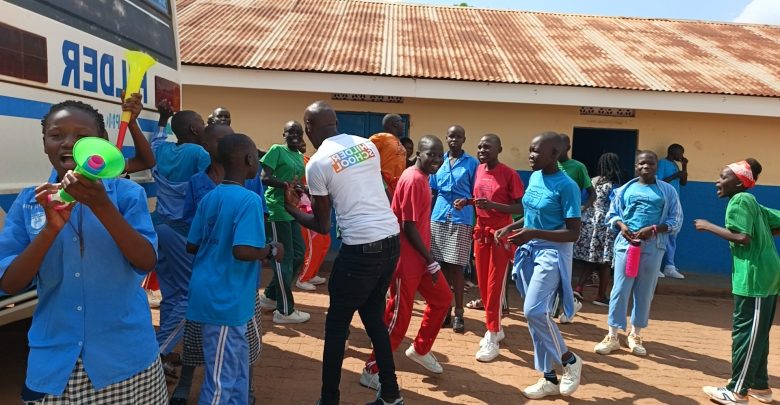
Hilder Private Primary School in Gulu City was one of the top schools in the list with 42 first grades with 100 &%, while Elshadiya Primary School also got 106 First Grades in the Primary Leaving Examination in the year 2024/2025 in Gulu City, the overall result was 770 in the Division One released PLE exams by the Ministry of Education and Sport, Mrs Janet Kata Museveni.
Irene Ocwee Friend, wept today while releasing PLE results at Hilder Primary School, revealed that what is special about Hilder Primary school is one of the best in the country. We specialise and want to tell you how we treat our family value, which is family value. How does the child do their homework?
We treat each child one-on-one. We have Alter here in our school since we founded the school in the year 2001.” The Director of Hilder Primary School, while crying, mused.
Tony Ogwok, the Headmaster of Hilder Primary school, admitted the best school in the Country in Uganda, for the last three years, in the year 2024, we got 39 from the PLE result, this year 2024.2025 we got 42 years, 25 boys and 14 girls.
The best pupil, a girl, got 4 Aggregate, the least got 11 Aggregate out of 42 first grades. For the last 3 years, the result has been good.
The story of PLE performance in Northern Uganda 2024/2025, the release of the 2024/2025 primary Leaving Examination (PLE), results, painted a detailed and revealing picture of primary education across Northern Uganda. From the districts of Acholi and Lango Sub Region to the growing urban centres, the results reflected both progress and persistent challenges in the region’s education journey.
Across the districts, thousands of candidates sat for the examination, marking one of the most significant academic milestones in their young lives. The performance showed that Northern Uganda continue to produce strong learners, particularly in Division Two and Three, even as efforts to increase Division One performance and reduce failures remain a priority.
In districts such as Kitgum and Lamwo, the results stood out positively. Kitgum recorded one of the highest numbers of Division One candidates, an indication of improved teaching standards, learner discipline, and school management
Lamwo sustained community support, teacher commitment, and learner resilience were beginning to bear fruit. Gulu District and Gulu City, as major education hubs in the region, showed mixed outcomes. While a reasonable number of candidates attained Division One and Two, a significant proportion fell into Division Four and the ungraded category.
This contrast highlighted the inequality between well-supported schools and those facing overcrowding, urban poverty, and limited learning resources, especially in peri-urban areas.
In Amuru, Nwoya, Omoro, and Pader Districts, the bulk of candidates clustered in Division Two and Three. This pattern suggested that many learners met basic competency standards but struggled to reach the highest levels of academic excellence.
These districts also recorded relatively high numbers of Division Nine (Failures), pointing to challenges such as late school enrollment, absenteeism, language barriers, and the lingering effects of poverty and past-conflict recovery.
Kitgum Municipality, despite its urban status, revealed a concerning trend. While some learners performed well, many candidates were recorded in the lower divisions and Division Nine. This outcome underscored the reality that urban location alone does not guarantee academic success, especially where socio-economic pressures and weak foundational learning persist.
Overall, the Northern Uganda PLE results of 2024/2025 told a story of steady but uneven progress. The region demonstrated strong potential, with many learners achieving Division Two, and a growing number of candidates in Division Four and Nine remained stakeholders that more work is needed, particularly in early grade literacy, teacher support, parental involvement, and school infrastructure.
In conclusion, the 2024/2025 PLE performance in Northern Uganda reflected a region on a path of recovery and growth. With targeted interventions, sustained investment in education, and continued collaboration between government, schools, and communities, Northern Uganda has the capacity not only to improve past rates but also to produce learners who compete nationally and beyond
- District by district PLE summary, Adjumani, Division 1: 102 Division 2: 1,057 Division 3: 1,052 Division 4: 711 Division 9: 600 Total candidates: 857
- Division 2: 1,057
- Division 3: 1,052
- Division 4: 711
- Division 9: 600
- Total candidates: 857
Summary:
Adjumani had a moderate Division 1 performance, with the majority of candidates concentrated in Division 2 and 3. A relatively high number also fell under Division 9.
- Amuru
- Division 1: 90
- Division 2: 1,174
- Division 3: 1,065
- Division 4: 575
- Division 9: 702
- Total candidates: 52 (⚠️ this total seems inconsistent)
Summary:
Amuru shows strong Division 2 and 3 performance, but the total candidates column may be incorrectly written and likely needs verification.
- Gulu (District)
- Division 1: 110
- Division 2: 2,452
- Division 3: 662
- Division 4: 300
- Division 9: 254
- Total candidates: 8
Summary:
Gulu District recorded very strong Division 2 results, with comparatively fewer failures. However, the total figure written appears incorrect or incomplete.
- Gulu City
- Division 1: 98
- Division 2: 687
- Division 3: 603
- Division 4: 840
- Division 9: 359
- Total candidates: 81
Summary:
Gulu City had a balanced spread across divisions, though Division 4 and Division 9 numbers are high, suggesting learning gaps among many candidates.
- Kitgum
- Division 1: 204
- Division 2: 673
- Division 3: 99
- Division 4: 28
- Division 9: 30
- Total candidates: 3
Summary:
Kitgum performed very strongly, with a high Division 1 count and very few candidates in lower divisions.
- Kitgum Municipality
- Division 1: 31
- Division 2: 652
- Division 3: 851
- Division 4: 527
- Division 9: 831
- Total candidates: 47
Summary:
Kitgum Municipality shows heavy concentration in Divisions 3, 4, and 9, indicating overall weaker performance compared to Kitgum District.
- Lamwo
- Division 1: 223
- Division 2: 939
- Division 3: 1,004
- Division 4: 520
- Division 9: 606
- Total candidates: 45
Summary:
Lamwo had good Division 1 numbers, but also many candidates in lower divisions, showing wide performance gaps.
- Nwoya
- Division 1: 106
- Division 2: 791
- Division 3: 724
- Division 4: 361
- Division 9: 353
- Total candidates: 40
Summary:
Nwoya recorded steady mid-level performance, with most candidates in Division 2 and 3.
- Omoro
- Division 1: 126
- Division 2: 1,134
- Division 3: 729
- Division 4: 431
- Division 9: 569
- Total candidates: 29
Summary:
Omoro shows a strong Division 2 performance but a significant number of failures, indicating uneven outcomes.
- Pader
- Division 1: 95
- Division 2: 1,247
- Division 3: 922
- Division 4: 405
- Division 9: 606
- Total candidates: 50
Summary:
Pader had one of the highest Division 2 counts, but also high Division 9 numbers, suggesting challenges at the lower end.
Overall Totals (as written)
- Total candidates: 30,694
- Highest Division 1 contributor: Lamwo & Kitgum
- Highest failure (Div 9): Amuru, Pader, Kitgum Municipality