Global Politics
UGANDA: “BIG IS BIG, I AM NOT RESPONSIBLE FOR THE AFTERMATH OF THE NORTHERN UGANDA CONFLICT” – NORBERT MAO
But narrative does not obey logic alone.

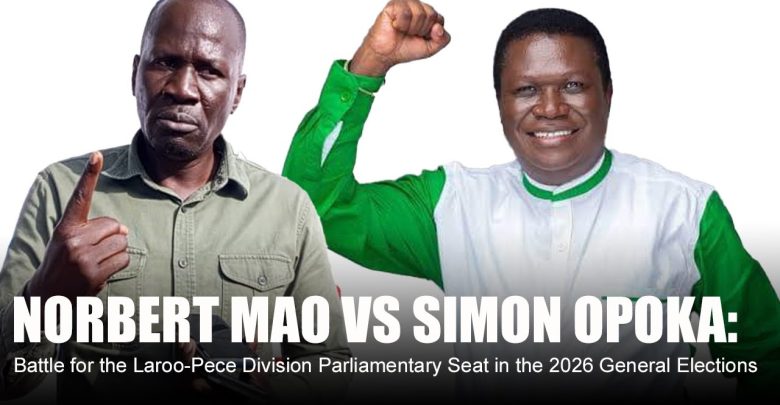
During NBS political talk shows, the front line, on Thursday night, the question was put to Norbert Mao an aspirant MP for Gulu City Pece-laroo, city east Division, why he failed to advocate for the track three diplomacy, the issues of accountability and root causes Northern civil strife, the Dakar declaration of west African. Through track III diplomacy. And where those parties in conflict reached agreement, why did you not present
To many survivors and observers, Mao’s answer feels like betrayal, Mao sort back, says someone asked me to account for the death that took place during the Northern Uganda conflict, I hope this man lost people from their home during the over two decades war. I am not responsible for the death from their home neither the death occurred during the Uganda conflict and during my tenure while representing Gulu Municipality as an MP. In 1987, the Africana and the ANC party met in their home.
GULU CITY-FRIDAY DECEMBER 17,2025
By Okumu Livingstone Langol, Our Correspondent
Not because people expect one man to carry the full blame for a war that was clearly larger than any individual, but because leadership in post-conflict societies is also about moral responsibility, not only legal or political accountability. When a leader distances himself from the aftermath of suffering, it can sound like distancing from the people who endured it.
The Acholi Sub Region bared the burn, political turmoil since 1971, during yet another military dictatorship of President Idi Amin, resulting to the genocide that still remain unreported to date, many actions of betrayal, of the lies of Mao’s happened to Lt. Col. Abwola, the former Uganda Army. Military takeover happened when he was on leave, but soon when he came back, many sons of Acholi and Lango who worked in the Uganda Army, asked him to do something to serve them from the monster. But Lt. Col. Abwola turned his back to them, when his time came, he asked his tribal men Acholi and Lango to help him when Uganda State Research Bureau came for him, he cried for help, but his men looked the other way too.
For communities in Northern Uganda, the aftermath is not a theory, is reality: trauma, broken livelihoods, unresolved justice, and generational pain. In that context, saying “I am not responsible” may be interpreted as a refusal to stand with victims, even if the statement is technically correct.
Betrayal, therefore, is the former dreaded son of Acholi who was President Idi Amin’s close ally, Col. Yusuf Adek helping his Kin men not about causing the war. It is about failing to fully own the pain that followed it. Many expected empathizes before explanation, in the state of giving solidarity before defense. Words matter deeply where wounds remain open.
A leader does not have to admit guilt to acknowledge duty. Silence, denial, or detachment, intentional or not can reopen old wounds. For a region that relied heavily on collective healing and Track Three diplomacy, such statements risk undoing the trust built through years of communal sacrifice.
In post-conflict Northern Uganda, people are not asking leaders to be blamed for everything. They are asking them not to walk away from what still hurts.
For more than two decades, the nights in Northern Uganda learned the sound of fear. It arrived with the wind, with hurried footsteps, with mothers counting children in the dark. The war did not only live in the bush where guns spoke loudly; it lived inside homes, in whispers, in the long silences that followed loss.
When the fighting finally slowed, it was not one single handshake or signature that ended it. Peace came limping, stitched together by many hands. Among them was Track Three diplomacy, quiet, almost invisible. Elders gathered under mango trees. Religious leaders crossed enemy lines with Bibles instead of bullets. Women’s groups spoke forgiveness when revenge seemed easier. These were not state actors, not generals or presidents, but communities speaking to themselves, trying to remember how to live again.
Globally, many countries reached out, asking why. Why had Northern Uganda burned for so long? Reports were written, conferences held, and funds pledged. The conflict was explained in terms of marginalization, power, history, and neglect. Yet for the people who buried children in their backyards, the causes were never abstract. They had names. They had dates.
In the aftermath, voices rose some demanding justice, others demanding understanding. Among the national figures was Norbert Mao, a son of the region and a political leader shaped by the war years. At public forums and interviews, his words were measured but firm. He said he was not responsible for the deaths that occurred in individual households. Responsibility, he argued, was larger than any one man. It belonged to systems, to armies, to histories that predated him and would outlive him.
But narrative does not obey logic alone.
In one NBS TV viewer, an old man named Robert Ochan participated in these statements on TV. He nodded, not in agreement, not in anger, but in tired recognition. “Maybe he is right,” Ochan said to no one in particular. “Maybe no single person killed my son. But someone always carries the story.”
In another home, a widow folded her laundry and turned the radio off. For her, responsibility was not legal or political, it was emotional. It was absent from the doorway every evening. It was the question no diplomacy could answer: Why us?
Track Three diplomacy taught people to sit together again. It taught them to speak without microphones, to grieve without permission. It did not erase accountability debates, nor did it silence pain. Instead, it created space where contradictions could coexist: peace without closure, leadership without consensus, forgiveness without forgetting.
The war ended, yes, but its narrative did not. It scattered into households, into statements, into denials and defenses. Norbert Mao’s words became part of that larger story, not as a final truth, but as one voice among many struggling to define meaning after devastation.
And so Northern Uganda moved forward, not in a straight line, but in fragments, carrying memories, negotiating blame, and learning, slowly, how to live with a peace that arrived quietly, long after the guns fell silent.
In Northern Uganda at the peak of insurgency in 2005, over 2 million people were driven from their homes to live in Internally People Displaced Camps, according to the former UN Under Secretary for Children and Women Affairs, finding by World Health Organization, indicated that over 1,000 people was dying from the IDP camps.
https://www.pambazuka.org/uganda-brilliant-genocide
Norbert Mao, is part of the year 2006, the Juba Peace Talks between the Lord’s Resistance Army (LRA), and Uganda People Defense Forces, (UPDF), which reached five addendums, but failed to used track three diplomacy to bring Banykole and meet face to face with Acholi to chart political transition.
The Dakar conference also known as the Dakar Dialogue and Daker Initiative was a historic conference between members of the Institute for Democratic Alternative in South Africa (IDASA), and the African National Congress (ANC).it was held in Dakar, Senegal between 9 and 19 July 1987.
The conference discussed strategies for bringing fundamental change in South Africa, National Unity, structures of the government in the conference in their private capacity and would later be condemned by South African government and future of the economy in a free South Africa. The IDASA delegation from South Africa, participated in the conference in private capacity and would later be condemned by the South African government for meeting a banned organization, the future indirect result of the conference was South African government talks with Nelson Mandela and his eventual meeting with P W Botha in 1989.
Norbert Mao, by distancing himself, came at dark of stack question asked to him to clarify, about the Juba Peace Talks agreement reach https://en.wikipedia.org/wiki/2006%E2%80%932008_Juba_talks
Finally, Ben Ongom, Bureau Chief of NBS, who is also asked to clarify a question from Chief of Uganda Defense Forces (CDF), Gen Muhoozi Kanierogaba warns Uganda voters to stay away from polling centers, they should go home and leave the polling center.
Norbert Mao’s response was that he tied the head of the Goat on his head, so that the Hyena should do away with him, without naming who Hyena is.
The CDF and the Commissioner Simon Byabakama, the E C also issued a statement warning Uganda voters to stay away from the polling center after voting. Both statements of the CDF and EC were condemned by fellow talks shows panelists, Simon Opoka, aspirant candidate of Uganda People Congress Party, and George Okello, aspirant candidate of TNT party.
Simon Opoka warned that, I don’t think CEF is ignorance of the law where the UPDF beat people with the Balaalo sticks used for animals, the law says after voting, they the voters should stay 20 meters from the polling center, Uganda Constitution Article 45 says after voting, voters should stay away 20 meters. And Article 3 of Uganda Constitution gives people rights they should protect their rights, sub section 4 says you defend the law, you can take up arms to throw out the government, close all the borders and declare a new president.
Ben Ongom, the NBS talk shows host referred the issue to Tony Kitara, an aspirant candidate for NRM party flag bearer.
Tony Kitara, one of the legal brain experts says in law if the law is prohibited, if you don’t show the law, there is no legal basis. “Which law prohibited voters to stay around, if the law provided that voters should stay 20 meters way from the polling center.” So, who is CDF and Uganda EC? Tony Kitara submitted.
George Okello, dismisses the notion of both CDF and EC, arguing that I got my rights as a legible voter, I should go and vote.
“I argue Ugandans should stay at polling centers after voting, the Minister of Justice and Constitutional Affairs, Norbert Mao says he won the election only waiting to count his votes, election we have yet to cast the vote. Hon. Mao has been violating all electoral law. He has been moving with his convoy in the night. What is the hidden agenda?” The three participants question Norbert Mao.
Hon. Norbert Mao answered that the question should be put to CDF and EC. “If its hidden agenda he does not know. I am not spokesperson for both CDF and the EC. I don’t want you to tie Goat head on my head so that Hyena eats me, I live in the country, I know what is happening, I know that some people should follow the law.” Hon. Mao stressed.