National
UGANDA: THE TUGS OF WAR JANUARY 15, 2026 QUARTER OF 24 THE 11th PARLIAMENT OF THE ACHOLI MPs will be dropped
There are those diehard MPs, the likes of Hon. Hilary Onek Obaloker, Hon. Andrew Ojok Oulanyah, Hon Gilbert Olanya Hon Dennies Onekalit Amere among other who are unvagable

The majority of the MPs from the Acholi Sub Region are National Resistance Movement; they should have been the focal point moving the motion on the floor of Parliament. To the contrary, they have failed to advance tangible problems affecting the Acholi Sub Region; therefore, issues of accountability are a big question voters are demanding they explain.
GULU CITY-FRIDAY, JANUARY 9, 2026.
By Okumu Livingstone Langol, Our Correspondent
The political reality of the Acholi Sub Region presents a paradox that continues to trouble voters and observers alike. While the majority of Members of Parliament from the region belong to the National Resistance Movement (NRM), the ruling party with numerical strength and institutional leverage in Parliament. This advantage has not translated into meaningful advocacy for the region’s pressing concerns.
Logistically, these MPs should have been the focal point for advancing motions, influencing policy direction, and mobilizing government resources to address the long-standing social, economic, and infrastructural challenges facing Acholi. Their proximity to power places them in a strategic position to speak forcefully on the floor of parliament and to negotiate tangible gains for their constituents.
Contrary to these expectations, however, their parliamentary record has been largely uninspiring critical issues such as post conflict recovery, land injustice, youth unemployment, inadequate health services, poor road infrastructure and persistent, and persistent poverty have not received sustained or silence, or at best sporadic engagement of the MPs has created a growing perception that political affiliation has been prioritized over regional responsibility. As a result, the people of Acholi increasingly feel disconnected from those elected to represent their interests at the national level.
This disconnect has elevated the question of accountability to the center of public discourse; voters are no longer content with party loyalty as a justification for political relevance; they are demanding clear explanations, measurable outcomes, and visible advocacy. The electorate is asking hard questions. Why has numerical strength not yielded policy influence?
Why do tangible problems persist despite representation within the ruling establishment? Until these questions are answered, the legitimacy of Acholi’s NRM MPs will remain under scrutiny, and the call for accountability will only grow louder
Thus, in simple terms, many NRM MPs from the Acholi Sub Region are at high risk of losing their parliamentary seats in the next election. Both women representatives and constituency MPs, some of the long-serving and well-known, are facing strong political pressure from changing voter expectations, internal party competition, and growing demand for better service delivery.
As a result, several of these leaders may not return to parliament, signaling a major shift in Acholi’s political landscape.
Among those facing this possibility are prominent woman leaders such as Hon. Sharon Balmoi, the Woman MP for Gulu District, Acan Judith Peace, Nwoya Woman MP, Catherine Lamwaka, the Omoro Woman MP, Sarah Menya, the Pader Woman MP, Beatrice Akello Akori, the Agago Woman MP, Nancy Acora, and the Lamwo Woman MP. Their political standing reflects the growing competition, voter fatigue, and shifting loyalties within their constituencies.
The challenge is not limited to women representatives, several constituencies are also navigating turbulent political water, those include Tony Awany, Ojara Okin PP, Ojara Martin Mapenduzi, Okot Amose, Lagen Atuka, and Dr. Okullu, Okot Peter, Akello Lucy, Betty Aol Ocan, Lawmaka Margret Odwar, are equally caught in this wave of political uncertainty.
Just interviewing Norbert Mao, a journalist in Northern Uganda, turned into a nightmare. Joly Laker, his personal political assistant, would turn journalists away.
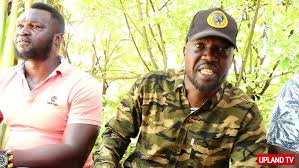
Recently, we went to interview Norbert Mao to ask him why he is campaigning for President Museveni and the ruling NRM party. Instead of granting journalists an interview. He called in the UPDF. This raises serious questions about whether Norbert Mao still wants to drag the country back into fear, intimidation, and repression rather than allowing free political discussion
.