
The power dynamic being mirred by Teso community, questioned the stability of Teso Community for over 60 years since independent in 1962. they have been stable throughout Idi Amin 8 years of terorisim, the Obote I and the Obote II regime they have been playing hide and seek game tin the 40 years.
The Teso Sub Region they have railing behind their Generals serving in the UPDF, when Lt. Gen. Elwelu was arrested they questioned why, not Calvin Echodu broke the rank with the ruling NRM government by questiong President Museveni and asking him to retire his son Gen Muhoozi from the army and preparw him through civilian roles for future leadershi
By Keefa Nuwahereza.
The closed-door meeting of Uganda’s ruling National Resistance Movement Central Executive Committee held on 10 November 2026 at State House Entebbe has been widely described by participants and subsequent reports as a failed or “flopped” attempt to settle the question of presidential succession.
According to multiple accounts drawn from participants who later spoke to international and local media, including sources cited by Agence France-Presse, the session exposed clear divisions over whether Chief of Defence Forces General Muhoozi Kainerugaba should be positioned as the preferred successor to his father, President Yoweri Kaguta Museveni, for the 2031 elections.
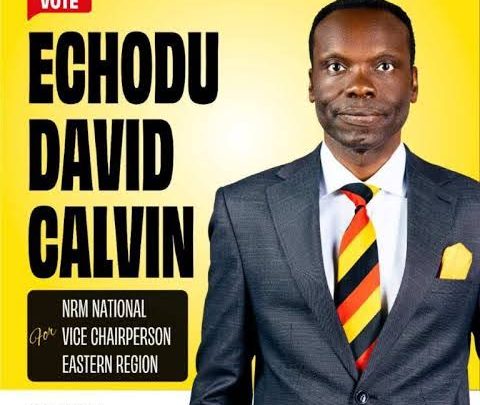
Central to the reported exchanges was the intervention by NRM vice-chairman for Eastern Uganda, David Calvin Echodu, who is said to have told Museveni directly that Muhoozi should be retired from active military service and given a civilian assignment so that he could become better acquainted with the ordinary population and prepare more thoroughly for political leadership.
Echodu’s reported argument was straightforward. A serving senior military officer, especially one who has occupied the post of Chief of Defence Forces, carries institutional weight and a particular public image that does not automatically translate into the skills of civilian political mobilisation.
By remaining in uniform, Muhoozi risked being viewed primarily through a military lens, while the demands of national leadership in a multiparty setting require sustained engagement with communities, party structures, local government, and the broader public.
Assigning him a civilian portfolio, the argument went, would allow him to demonstrate competence in administration, policy delivery, and constituency work. At the same time, Echodu and others who shared similar reservations urged Museveni himself to stand again in 2031, on the grounds that Muhoozi was not yet ready to assume the presidency.
The meeting itself was conducted under unusually tight security. Several NRM Secretariat officials who had arrived at State House were reportedly turned away, a measure attributed to earlier leaks from a previous CEC sitting on 27 October 2026, during which Museveni had presented a discussion paper on leadership succession. Of the roughly 28 members present, only seven cast votes on the succession question before the process was halted amid open challenges.
Four of those votes favoured Muhoozi’s candidacy and three opposed it. Participants described applause from some members when the idea of an immediate endorsement was contested. Concerns raised included Muhoozi’s public statements on social media, which some senior party figures regarded as confrontational and potentially unsettling to sections of the population and the party itself.
This episode sits within a longer pattern of succession debate inside the NRM. Museveni has led Uganda since the National Resistance Army took power in 1986. Constitutional term limits were removed and the age limit for presidential candidates was later amended, allowing him to continue contesting. Speculation about a possible family succession has circulated for years, particularly as Muhoozi rose through military ranks and, in March 2024, was appointed Chief of Defence Forces.
Muhoozi has periodically signalled interest in a political future, including statements about a possible 2031 run, while also announcing in early November 2026 that his time as CDF was approaching an end and that he intended to hand over the post to a qualified officer. Those announcements added a further layer of uncertainty to the internal party discussions.
The reported reservations expressed by Echodu and others do not appear to have been isolated. Accounts from the meeting indicate that while some members, including certain ministers and regional party figures, spoke in support of Muhoozi’s record in security and anti-corruption efforts, others questioned whether a rapid transition from the military high command to the presidency was advisable.
The military’s historical role in Ugandan politics is well known: the National Resistance Army was the vehicle that brought Museveni to power, and the Uganda People’s Defence Forces remains a central institution. At the same time, the 1995 Constitution and subsequent political reforms have emphasised civilian control and multiparty competition.
Placing a serving or recently serving senior officer at the head of a civilian government therefore raises practical and perceptual questions about the balance between security institutions and elected political authority.
Echodu’s position as NRM vice-chairman for the Eastern region gives his intervention particular weight within party structures. Regional vice-chairpersons sit on the Central Executive Committee and represent important geographic constituencies.
Eastern Uganda has at times experienced distinct political dynamics, including periods of tension and security operations.
Advising that Muhoozi step out of the army and into a civilian role can be read as an attempt to broaden his political base beyond the military and to reduce any perception that succession is being managed solely through the armed forces.
It also reflects a classic transitional dilemma faced by long-serving leaders: how to manage the transfer of power while retaining sufficient institutional continuity and party cohesion.
The broader Ugandan political landscape provides additional context. Opposition parties and civil-society groups have long criticised the concentration of power and the slow pace of genuine generational change. Within the NRM itself, the existence of competing factions and personal networks has been documented over successive election cycles.
The Patriotic League of Uganda, associated with Muhoozi, has conducted grassroots mobilisation, yet the CEC meeting indicates that senior party organs have not automatically endorsed a formal succession path. Museveni is reported to have guided that another CEC meeting would be convened to continue the discussion, suggesting that the 10 November session did not produce a settled outcome.
Public and media reaction in the days following the reports has been mixed. Some outlets framed the events as evidence of resistance to an automatic family succession, while others noted that Museveni retains decisive influence over party processes and that the final decision on 2031 remains with him.
The fact that details of the closed-door meeting reached the media quickly, despite security measures, also points to the difficulty of containing sensitive internal debates in a highly connected information environment.
Social media commentary has ranged from support for Muhoozi’s potential candidacy to scepticism about military-to-civilian transitions and concerns over the length of Museveni’s tenure.
From a governance perspective, the issues raised in the meeting touch on several recurring themes in Ugandan politics. First is the relationship between the military and civilian institutions. Uganda’s post-independence history includes periods of military rule and civil conflict; the NRM’s own origins lie in an armed struggle.
Maintaining professional civil-military relations while managing leadership change therefore carries institutional significance. Second is the question of experience and legitimacy.
Leadership succession in dominant parties often involves a balance between loyalty, competence, and the ability to mobilise voters across regions and generations. Advising a period of civilian service is one practical method of addressing perceived gaps in political experience.
Third is party cohesion. Open disagreements inside the CEC, even if contained, signal that succession is not a purely technical matter but one that engages competing interests and assessments of readiness.
Looking ahead, the next scheduled or convened CEC meeting is expected to revisit the same questions. Whether Museveni chooses to stand again in 2031, whether Muhoozi is formally endorsed, or whether an alternative succession arrangement is developed will depend on further internal consultations, public sentiment, and the president’s own assessment.
In the meantime, the reported advice from Echodu has placed on record a specific proposal: that any preparation of Muhoozi for higher political office should include a deliberate shift from military command into civilian responsibilities.
That proposal reflects both an acknowledgement of Muhoozi’s existing profile and a caution about the pace and manner of any transition.
The events of 10 November 2026 therefore illustrate the complexities of managing leadership change inside a party that has held power for four decades.
They also show that even within tightly controlled institutions, differing views on timing, readiness, and institutional pathways can surface.
The full implications will become clearer only as further meetings take place and as decisions about the 2031 electoral calendar crystallise.
For the present, the central reported fact remains that a senior NRM figure advised the president to retire his son from the army and assign him civilian duties as a necessary step toward political leadership, while also recommending that Museveni himself consider another term.
Those two linked recommendations encapsulate the unresolved tension between continuity and change that continues to define Ugandan succession politics.