
Global PoliticsHealth
UGANDA: HIGHEST NUMBERS OF MENTAL ILLNESS IN NORTHERN UGANDA ARE CAUSED BY ECONOMIC ADVERSITY- MEDICAL HEALTH EXPERTS
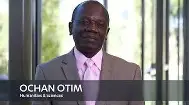
Heavy Metal Contamination: by Dr, Chan Otim

Other causes of increasing mental illness: we are seeing young people committing suicide, and yet they come from rich families, because they struggle from the single headed family. Because of the relationship with children, parents say You are going to school; if you don’t pass, I will cut your head.
The children could not come in term with failure at schools, this mainly, the parents do not have time to balance with their children. Children who are in boarding schools do not have enough time to sleep. Because of the pressure, the normal amount of sleep for sleeping is six hours, but in college they children sleep only for three hours.
File Photo
GULU CITY-MONDAY AUGUST 31, 2026
By Okumu Livingstone Langol, (Uganda Correspondent)
In the heart of Northern Uganda, Queen Apiyo Barbara stands as a symbol of resilience, though her injury has been shadowed by the weight of trauma. Like many who bear the scars of injury, her story is not only one of physical pain but of a deeper, often invisible struggle of mental illness born from the harsh realities of her environment.
The wounds she carried are not isolated; they echo the pain of a community where systems meant to support have often failed, leaving many to face adversity alone. It is in this space, forged by hardship and neglect, that traumatic mental illness finds its roots.
For Queen Apiyo, the trauma was not simply a personal ordeal, but a reflection of a broken reality. The injury she suffered became a catalyst, revealing the fragile state of mental health amidst environmental strain. It is here that the connection between individual suffering and community plight becomes clear.
In telling Queen Apiyo Barbara’s story, we embrace a truth often untold: that healing requires more than treatment; it demands rebuilding and support within the community. It invites us to understand mental health as a shared responsibility, a healing journey not just of one, but of many.
Queen Apiyo Barbara, in her conclusion, made a dire demand: my appeals to the community let us also understand mental illness; they will get a cure; appeals to the community: they should have listen ear.
Lover Atim, the Psychologist working with the Santa Foundation based in Gulu City, say on September 2nd to 4th, we are offering a three-day free medical Mental Health camp. We are giving them support to avoid triggering the sickness.
In 2025, the turnout for the mental health illness- the first Mental health camp, it attracted 80 people, but we expect more this year. People, what your belief in health is biopsychosocial; we cannot deny this spirit it nature. We have to work with religious organisations and cultural institutions.
When you cover yourself with the religious leaders’ refrain aspect, then we will be able to address the spiritual. The biggest aspect is the delay; someone may be struggling to get the solution to come to a mental illness clinic. I want it as you have travelled normally. We expected 500 people and ask them to bring adults and children; this helped them recover their lives, and many of those were successful cases. Suppose they don’t come; what would be there?
The allocation of funds from one source seeking health services and money: the affected health is not expensive, but when you delay, it will be very expensive. Let us get mental health treatment early.
“The cost of mental illness is a hindrance; a factor you pay UGX 1 m to UGX 2 m. Can a family afford it? When you go to the bar, there is a son of a rich man who can buy all the drinks, but you go in, you will be a victim, but the rich man’s family will take him away for treatment.”
Let people there know that there is globalisation, like the Global Health Alliance work in Palabek refugee camp in Lamwo District; those refugees from South Sudan, D.R. Congo will be getting UGX 100,000 for their services, and you don’t, and the dimension is the cost. The dimension of cost is availability.
“For the last five years, the numbers have been increasing. We are seeing young people committing suicide, and yet they come from rich people; the increasing equivalent is because of economic adversity. People are struggling because the relationship goes to the children; parents say to their kids, I have sent you to school; if you don’t pass, I will cut off your head.”
The children could not cope with the pressure of reading and, as a result, failed at school; other factors: parents do not have time to balance with their children.
Take, for example, a child sleep only for three hours instead of sleeping for six hours; it led for suicide because of how such a child goes and explains to her parents, without expectations and guidelines. A child coming from a rich family comes with a million shillings. But a child from a poor family comes with only 10,000 shillings; the end result will be suicide. Wellness is a long-term record.
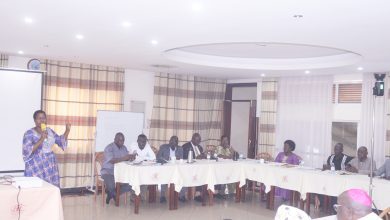
Ojok Michael from Joint Community Health, Gulu Mental Health, came with armful practicing Clinical Psychologists to address the press on Mental Health Illness at the Northern Uganda Media Club (NUMEC), including a mental illness expert from St Mary Lacor Hospital, and Stephen Kinyera from Gulu Regional Referral Hospital.
Stephen Kinyera outlined the importance and reasoned that the coordination partners, we come together to fight mental health issues; many people do not know what mental health illness is until they come to you.
When you look at the issues of suicide symptoms, people do not know the symptoms of mental health illness when they go to meet a doctor; reecho that we are going to Gulu Prison Primary School, where they are going to have a mental health camp.
Oliver Atim indicated early that the Psychosocial health until I went to the community; then I asked them if they know what mental health illness is, but the community was not aware of the importance of mental health, and yet mental health illness is real.
Kinyera added that we are doing a mental health illness camp in September because this is the month of the high suicide cases. We are doing this at the moment because, at the beginning of the month, we are not doing it because of the money, but for the services. We want to know what services we are giving.
“We want to work together as a pattern; that is what I see for the next five years. When we are doing this, we want to break stigma. People get to know where to go; people should come and get services if they have mental illness. But when you ask them, do you know about mental illness, they will say, those people are there. But do you know that you don’t sleep well; do you know that you burst at people?
A case scenario: Among NUMEC journalists, we need counselling and guidance. The symptoms and signs of mental health-related issues are very common, because you find a lot of unnecessary conflict which can be attributed to mental health illness.
In Uganda, the specialised mental health ratio is 1to 1000 people; we will be having services: health, clinical, HIV and other illnesses.
Paul Oloya, from Global Health Alliance, Head of Programs, argued, ” We are now one year in the business; our services have not stopped; we give services to Mental Health Illness affected people.
Why we have, he posed, indicating that Global Health Alliance is with others different NGOs which they are participating in services. Why, how we work: we have realised that mental health illness is a real challenge.
It presents in many forms; we believe that the conservative effort when we work with the government, we will realise that we can give services. Because we have seen through research that the mental health is when someone is depressed, he will fail to go into the garden; the overall production will go down.
The government will lose it’s a big, multifold approach we decide for the community and the regions. We are calling people to come in massive you will not know that you have your neighbours. We should have experts on psychological services, which will be provided, this free of charge. We ask the Acholi community and Uganda to respond.
Report: Uganda Mental Health Illness indicated below as follows: The State of Uganda Population Report officially classifies mental health as a “silent emergency” due to a 71% surge in facility-reported cases from 2021 to 2024. Roughly 24.2% of adults and 22.9% of children in Uganda live with a mental health condition, with depression and anxiety being the most pervasive. This rising crisis is fueled by unique socioeconomic and structural risk factors, including high youth unemployment, economic instability, trauma from past regional conflicts, HIV/AIDS-related psychological distress, and high rates of alcohol and cannabis abuse. Despite this massive burden, Uganda faces a critical treatment gap where fewer than one in ten people receive appropriate support. This shortfall is severely aggravated by a stark workforce shortage of fewer than 0.1 psychiatrists per 100,000 people and extreme infrastructural congestion at Butabika National Referral Mental Hospital.
If you want to explore the solutions being deployed to address this local emergency, I can:
- Detail the peer-led counselling models currently being scaled in Uganda.
- Provide details on how Butabika Hospital is managing its overcapacity.
- Share findings from studies on maternal depression in rural Ugandan clinics.
The World Health Organisation (WHO) addresses the global mental health crisis through its Comprehensive Mental Health Action Plan, which outlines strategic pathways to scale up care and protect human rights worldwide. The core global strategy focuses on integrating mental health into primary care, training community health workers to deliver basic psychological interventions (a process known as task-shifting), and moving away from institutionalised, long-term asylum care toward community-based services. Additionally, the WHO heavily emphasises cross-sector promotion and prevention, advocating for policies that reduce financial insecurity, protect victims of gender-based violence, and implement school-based psychological programs for youth. Finally, the framework prioritises the strengthening of information systems and research, ensuring countries collect high-quality data to target funding efficiently and uphold the human rights of individuals living with mental health conditions.
If you want to look at how these strategies apply locally, I can:
- Explain how task-shifting is being used in rural Uganda.
- Provide details on Uganda’s school-based mental health studies.
- Detail the WHO’s specific targets for reducing suicide rates globally.
This is for informational purposes only. For medical advice or diagnosis, consult a professional. AI responses may include mistakes.
According to the finding what many causes of mental illness in Northern Uganda, the root causes vary; many mental health illnesses are attributed to drug addiction, heavy alcohol consumption, Balongkole demonic, and family Gender-Based Violence.
Opiyo Mark is not the real name alluded to as the victim. His sister, aged 50, got a mental health illness because when she went and joined the church in Lajwar Tek Village, The Omoro District, the sister developed mental illness.
Emeritus Chief Justice Owiny Dollo Chigamoi, and Amb. Dr Olara Otunnu imitated Rocco Paco, Acholi cultural revival, because of the aftermath of the Lord’s Resistance Army (LRA), because most of the older people have died from the Internally Displaced People Camps (IDP), young people, including Women and children, became Alcoholic addicted.
Many head of household, the likes of breadwinners, have abandoned their responsibility, as they resort to heavy drinking; people spend all day drinking, up to late at night.
Emeritus Chief Justice Owiny Dollo, time and again in public gathering, funeral rite, and church services, became the voice advocating for the disbandment of secret drinks.
Other research conducted by Dr Ochan Otim in Uganda indicated mental health illness-related issues that led to high mortality; his findings are as follows: Dr. Ochan Otim’s research investigates the presence of toxic heavy metal contaminants in locally distilled and packaged alcoholic spirits (“waragi”) sold in northern Uganda’s Acholi sub-region.
Key Findings
- Heavy Metal Contamination: Research identified significant levels of copper, barium, and manganese, with copper showing the highest concentrations, alongside elements like antimony, selenium, and zinc.
- Highest Risk Brands: Lira-Lira spirits contained extreme copper levels, vastly exceeding WHO guidelines depending on the sample source.
- Other Brands: The Relax brand was identified as the most contaminated among the remaining samples when excluding Lira-Lira’s copper content.
- Public Health Impact: Published in PLOS One, the study concluded that consuming these cheap, contaminated spirits elevates health risks, contributing to higher mortality and non-communicable diseases in the region.
If you’d like, I can provide more details on:
- The specific health risks associated with copper and other heavy metal ingestion
- Recommended policy actions or regulatory measures to address alcohol contamination in Uganda



One Comment