AgricultureNational
UGANDA: UGANDA FACES COURT-ORDERED ACHOLI WAR DEBT COMPENSATION AMID SH 750 MILLION RESTOCKING CORRUPTION ALLEGATIONS

“For us, the Acholi War Debt Claimants seeking cattle compensation, our demand is clear: we want the Government of Uganda to compensate us for the cattle that were looted during the Lord’s Resistance Army (LRA) conflict. We took the government to court to seek justice for the losses we suffered. Based on the court proceedings.
Gulu High Court Judge Justice Philip Odoki ruled that the Acholi War Debt Claimants’ cattle compensation should be paid; we are therefore demanding that the Government honour the court’s ruling and compensate the affected claimants for the animals they lost during the conflict.”
GULU CITY- TUESDAY OCTOBER 20,2026
By Okumu Livingstone Langol, (Uganda Correspondent)
State Minister for Northern Uganda decried that the restocking program was stuck with UGX 750 million in Agago District, as high-level corruption frustrated the selection of beneficiaries; we have taken UGX 750 to the Pearl Bank.
Hon. Betty Akello Akori, the state minister in the Office of Prime Monster almost in dire tone says in Luo language, (wek awaci wuu, president Museveni omito loro poko Dyangi woko, pien wan wakero wilo Dyangi) I Arrive late for the Cabinet meeting on Monday, I found president Museveni was almost cutting funds for restocking cattle. President says the Acholi community does not want to buy cattle, because all UGX 82 billion given for cattle restocking, no animals was bough.
“In Agago District, UGX 750 million is taken to Pearl Bank because the beneficiary was not selected due to corruption; how can the Parish Chief also be registered to part of the cattle restocking, and yet the cattle restocking is meant for the Vulnerable people?” the Minister made the statement at Acholi Inn during the Northern Uganda Action Funds (NUSAF IV launch)
She added, in Gulu City and Lira City, the government stuck with UGX 30 million in Gulu City and UGX 60 million in Lira City, because the beneficiary who got UGX 5 million for the animal restocking programs has returned their money. And yet, soon the Government is enrolling the second phase of livestock restocking.
What can we do? Should we take the restocking funds back to the treasury because we cannot find the beneficiary? This is because the Parish Chiefs, who are the selecting committee for restocking, do not know the computer system.
However, in all selected areas of beneficiaries, Acholi Lango and Teso Sub-Region, the National Resistance Movement (NRM) party marred the process of the selection committee, because the special group is compromised with the NRM women’s group. NRM people with disabilities, NRM Youths who have no interest in serving. Targeting of beneficiaries: The beneficiary selection should be through community-based targeting mechanisms. Whereas the programme will provide funds to all households in the district, priority will be given to the following households: Elderly Former abductees, female-headed households, unskilled and unemployed youth, persons with disabilities Widows/widowers.
The Restocking programme will aim at providing money to all households in the three sub-regions of Acholi, Lango and Teso.
Beneficiaries shall be selected per parish, and each household will receive five million shillings to enable them to purchase three cows and two oxen.
At the Parish level, the Parish Development Committee will first list the number of households in a given parish and, from this list, identify and consolidate the beneficiaries for that parish in line with the funds available for each parish.
The PISO/GISO will be part of the Parish Development Committee
The Chief Administrative Officer shall then communicate the consolidated beneficiary list to the Permanent Secretary, Ministry of Local Government, and the Ministry of Information, Communication Technology & National Guidance (MoICT&NG) for storage and alignment with the Parish Development Model Management Information System (PDMIS).
The Internal Security Organisation will carry out verification of the beneficiary list and submit it to the MoICT&NG.
The MoICT&NG will then submit a final consolidated and verified list to the OPM for payment.
Allocation of funds to Districts
According to UBOS, A Household is defined as a person or group of persons, related or unrelated, who normally EAT and LIVE together. This is not the same as a family.
A family includes only people who are related, but a household includes any group of persons who live together, whether they are related or not.
The following allocation criteria will apply while allocating funds to districts under the Restocking 2 programme;
Number of households in a given district;
Number of Parishes in a given District: Given that the programme is to be implemented at the household level, the number of parishes in a given district will constitute the main allocation criterion. Minimum Requirements for selecting the beneficiary household.
Selection of beneficiaries shall commence and shall not exclude households that have benefited from other Government programmes (NAADS, Emyooga, PDM)
Households and individuals that benefited during the first cattle restocking programme and through the cattle compensation programme shall not be included.
Acceptability to sign a consent form between the benefiting household and Parish authorities, with copies to the Sub-County, District and OPM.
One must have a National Identification Number (NIN).
How did the Local Council I and II select their relatives, wives, and themselves?
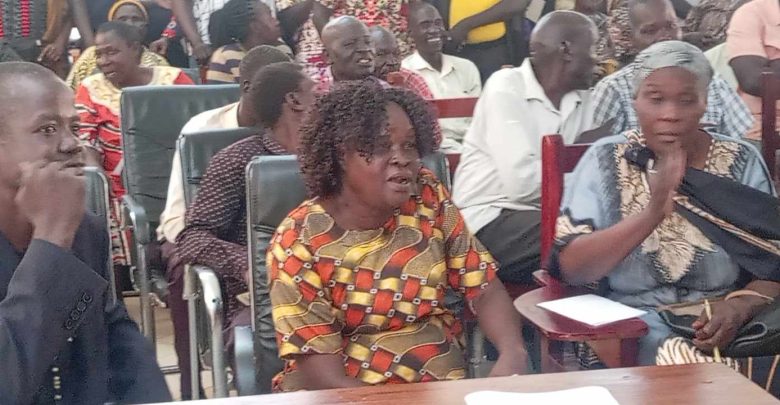
John Charles Luwa, Gulu City Planner, who was the focal point person for the livestock restocking table the issues when the joined Gulu City Executive officials and, Gulu City Council and Gulu City Town Agents who were the responsible official for the selection. John Luwa voiced his concern that the selection exercise was marred because Local Council 1 and 2 failed the selection procedure by selecting their relative.
“We want the technical Executives, the City Town Agents, and the Gulu City Town Clerk to go to the ground and make sure we oversee the selection verification ourselves. Because according to the lists that have been presented here, names of the targeted beneficiaries are not here.”
The Local Councillor 1 of Kasubi ward, one called Okwonga, stood up and rejected the verification exercise, saying that the LC1s are also beneficiaries because they also suffered the insurgency, likewise with all other targeted groups.
“Why do you want to go on the ground for the exercise of verification, and yet when the selection was done, we went through the Baraza? We cannot allow you, the technical Executives committee.” The LC1 for Kasubi warned.
Alex Okoya, the Local Council 2 Chairman for Pece City Division, stood up and warned, threatening John Charles Luwa never to dare to step on the ground in the name of cattle restocking verification.
“Some of you, the so-called Executive City officials, who are you to disown our selection process? We shall deal with you because some of us talk directly to President Museveni; who are you?” While pointing at the focal point person, John Charles Luwa
Peter Banya, the Deputy City Resident Commissioner, took side with the Gulu City Council 1, basing his argument on the fact that since the Local Council election was around the corner, let the election pass first.
“I know some of you feared losing in the forthcoming Local Council election, and we don’t want to force you. Let the lists of cattle restocking be as they have been selected by the Local Council.” Gulu Deputy City RCC, Peter Banya, ruled out and fathered the corrupt Local Council Official
Acholi War Debt Claimants cattle Compensation versus livestock restocking
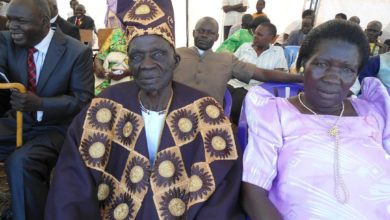
Peter Oweka, 74 years old, the Executive of Acholi War Debt Claimants Cattle Compensation hail from Bwongatira Sub County Gulu District, is one of the bitter people, dismisses the so-called cattle restocking programs by the government of Uganda against Justice Odoki Phillip ruling that the government pay Acholi for the losses of their animals during LRA war.
“We want our cattle to be compensated; we won the case. We challenged the government that allowed our animals to be looted during the Northern Uganda insurgency from 1986-2006. We want our cattle compensated now; the government say they are giving five cattle as part of the livestock restocking. This is not the first time the government has come out to claim to restock the animals looted during the insurgency.
In 1992, during Latigo Okwonga, the first Uganda Local District Uganda District Chairman LCV, in that time the Uganda Government was given old Cattle which was not producing and the animals which their cock tails were cut. The Acholi Community rejected the livestock restocking, calling it “A shame: animal livestock restocking.”
In 2025, last year, we were supposed to be there when President Museveni called all Local Council 3 of the Acholi Sub Region, all Resident District Commissioners, Chief Administrative Officers (CAOs), and all the Acholi Parliamentarian Groups (AGPs). President Museveni summoned them and gave a directive that, instead of paying the Acholi War Debt Cattle Compensation, the government is restocking each household in Acholi, Lango and Teso Sub Regions.
President Museveni blundered when he failed to invite the Acholi War Debt cattle claimants while he announced the animal restocking, that each household would receive five animals, without seeking consent from the War Debt cattle claimants.
In 1987-1988, the Karamojong cattle rustlers raided all the animals from Acholi Sub Region, Lango Sub Region, and Teso Sub Region. We, the members of the Acholi War Debt cattle claimants, called for compensation and took the Uganda Government to court.
The Acholi war debt claimants filed their suit against the Government of Uganda in the High Court in 2007 (with the association itself formed in 2005 and legal actions or petitions continuing into 2008). The case was presided over by Justice Remy Kasule (Remy Kasule) in the Gulu High Court.
Later, President Museveni seek for out of court settlement between Acholi War Debt Claimants and the Government of Uganda, where the government paid UGX 10 billion out of UGX 1.7 trillion, by then the government later released UGX 50 billion as part of the Acholi War Debt cattle compensation, but we are surprised that instead of paying us, the government reallocated the UGX 50 billion to Acholi Local Government as grants.
Peter Oweka argued that the president go ahead with his cattle restocking programs, because when the war broke out in Acholi Sub Region, we suffered heavily; the cattle compensation we won in court case, we are going to follow until we get our cattle compensation. But the matter was concluded before the court of law.
Our Correspondent asked, the Executive Acholi War Debt claimants, why president made a U-turn not followed his president pardon to settle the Acholi War Debt claimants?
Peter Oweka revealed that in 1992, with restocking before the Acholi War Debt cattle compensation claimants were initiated, soon the Acholi community rejected the cattle restocking, which was a shame program. As we dragged the Government to court about the cattle compensation, since the restocking program is the Uganda Government it cannot interfere.
Thus, we opted for another court case since the Uganda Government is using gunboat diplomacy. Before Justice Odoki, we won the case; why does President Museveni not want to pay the Acholi War Debt Claimants?
Early on, President Museveni asked Gulu High Court Judge Remy Kasule, who also, in turn, advised us to allow for an out-of-court settlement. Our lawyer, a Kampala Court Advocate, also agreed.
The lead counsel who represented the Acholi war debt claimants is Jet John Tumwebaze, a prominent Kampala High Court advocate and senior partner at Kampala Associate Advocate (KAA).
Tumwebaze and his legal firm have long handled the historic civil lawsuits against the Attorney General on behalf of thousands of victims seeking compensation for livestock and properties lost during the LRA insurgency.
Other notable legal figures involved in the litigation of this long-running 2006/2007 High Court case include:
Doreen Ashaba, who served as one of the key active advocates representing the claimants during crucial High Court verification orders and out-of-court settlement negotiations.
Norbert Adyera, the then Chairman of Acholi War Debt, led the Acholi community. While not the lead court advocate, he is the prominent Acholi representative and chairperson who legally filed the cornerstone 2006 High Court Civil Suit alongside other claimants.
The Acholi War Debt Claimants Association has approximately 21,266 members across eight districts in the Acholi sub-region, though government verification and legal lists vary, with about 23,000 to 25,000 total claimants submitted and 16,946 to 17,000+ cleared or confirmed in official government compensation roster.